Will history repeat with Red Bull’s Gasly-Albon switch?

Feature image: @ToroRosso

Formula 1 news has been pretty quiet as the one week mark passed on the summer break but that all changed on Monday morning as Red Bull announced that Toro Rosso’s Alex Albon will be making the jump to Red Bull while Pierre Gasly will return to Toro Rosso for the remainder of the season.

The news shouldn’t be surprising given how poor Gasly has been this season, but ultimately it is, it is a surprise.

Everything that had come out of the Red Bull camp — comments made at various times and various publications from both team principal Christian Horner and advisor Helmut Marko — said that Pierre Gasly would be given until the end of the season to try and turn things around, that they wouldn’t switch their driver lineup mid-season.

Comments like that aren’t thrown around for the sake of saying it and people don’t just ‘lie’ like that — it’s unprofessional and in poor taste, so I believe they were genuine at the time they were made.

But circumstances change, and I think there are a few reasons why Red Bull have decided — in spite of making those comments — that to ultimately make the switch mid-season.

The first one is the constructors championship.

It’s no secret that Red Bull have made a step recently, taking two wins in the last four races before the break at Austria and Germany, while almost taking victory at Hungary were it not for a masterclass strategy call from Mercedes. With their improvements and results through Verstappen, Red Bull are within striking distance of Ferrari in the constructors standings — sitting just 44 (blessed) points behind the Scuderia.

In all reality, Red Bull should already be ahead of Ferrari. While Verstappen has been in the form of his life and dragging that Red Bull probably further than it should, Gasly has severely let down Red Bull by scoring just 63 points to Verstappen’s 181 — just a hair over 25% of Red Bull’s total points so far this season.

With second place now a realistic target for the second half of the season, it makes sense for Red Bull to make this move, now that they are within touching distance of Ferrari and their car seems like it’s the next best after Mercedes (though, there are some power circuits coming up for Ferrari such as Spa where they have a chance to be closer).

The second reason was kind of highlighted by the Hungarian Grand Prix and some of the comments Christian Horner made after the race with regard being able to ‘protect’ Verstappen.

In the past, Mercedes have been able to use both of their cars to mix up strategies and force Ferrari into doing something that isn’t in their comfort zone. An example of this was last year’s Italian Grand Prix, where Mercedes were able to use both Hamilton and Bottas to engineer a Mercedes win from the sole Ferrari of Kimi Raikkonen, a race where Lewis Hamilton’s tyres outlasted Raikkonen’s.

In Hungary, there was nothing and no one to protect Verstappen from anything Mercedes wanted to do and with Gasly being no where in that race, Verstappen was left exposed.

Let’s talk about Gasly very briefly… He forced Red Bull’s hands with this one — he’s just been awful, sitting on 63 points in the standings and only five ahead of Carlos Sainz in a McLaren. Gasly has been no where near Verstappen in qualifying or in the race all season long, and the one time he finished ahead of Verstappen was Silverstone when Verstappen was rear-ended by Vettel. This move was coming, one way or another.

Gasly now enters a very dangerous part of his career back at Toro Rosso, because now he’s fighting to show he still belongs in Formula 1. How he handles this situation and how he responds to it on the track are going to be incredibly key to his F1 future because Red Bull have shown that they are not afraid to cut ties with their drivers — whether it’s academy drivers (Dan Ticktum) or F1 drivers (Daniil Kvyat).

Unlike Kvyat’s situation, there’s no driver, really, in the Red Bull academy waiting for an F1 seat as Gasly was in 2017 when Red Bull moved on from Kvyat. Pato O’Ward is too raw yet and unless Red Bull want to thank their engine partner Honda by promoting their junior driver, Nobaharu Matsushita, from F2 then who is going to take Gasly’s Toro Rosso seat for 2020? (And for a disclaimer, sorry, I don’t really believe in Sean Galael)

The only other driver I can think of would be Sebastian Buemi, and that’s not a big of a reach as you may think. You remember Brendon Hartley after all, right?

So, in that regard, Gasly should be safe for 2020, because as bad as he has been this season, he’s still better than any other option Red Bull have outside of F1.

Let’s talk about the switch from the opposite perspective… Red Bull ultimately went with Alex Albon for the remainder of 2019 and not Daniil Kvyat.

Firstly, I get it, I understand why.

Gasly may have been able to turn it around before the season ended but 12 races is a large enough sample size to read between temporary struggles and who he is this season, and things weren’t getting better near the summer break to warrant Red Bull waiting to see if a corner had been turned.

It’s a great decision by Red Bull — harsh as it may be — to give up on Gasly this season and start getting their ducks in a line for 2020.

Regardless if they kept Gasly for the rest of the season, Red Bull had a big decision to make with their second driver seat and it was probably going to involve them replacing Gasly anyways. You can understand why they may have shown hesitation promoting Alex Albon to a full-time seat for 2020, given how this Gasly experience just ended. But with Red Bull promoting Albon for the last nine races — with no guarantee for 2020 — they can get an eye in with Albon in that Red Bull seat and see what’s what, and this will only help in their decision making process for 2020.

And look, let’s get this out there. Albon has been impressive this season and deserves this shot in his own right — he’s been so much better than anyone, including Toro Rosso and Red Bull, could’ve ever imagined. For someone who, I still think, was a stopgap for Toro Rosso because Dan Ticktum failed to acquire his superlicence. And I said prior to the season he was probably the worst F2 driver coming up this year (and I still think that’s the case) but the gap is considerably smaller than I thought it would be.

But as is the case with Red Bull, they’ve opted for upside in their decision making rather than who is the better driver right now.

They lost out on a better driver in Carlos Sainz and got caught up in the potential of Gasly. Had they had Sainz from the beginning, none of these headaches would be bothering Red Bull… But alas…

Are Red Bull about to go down the same path and make the same possible mistake again by choosing Albon over Kvyat for these remaining nine races?

I think Kvyat is a better driver than Albon right now and I think he’s unlucky not to have been chosen for that seat for the remainder of the season.

I know, I know… People will say Kvyat had his chance etc. etc. but the reality is he’s not the same driver now than he was then: he’s better (not that he was ever bad to begin with) and I think deserves a second chance at Red Bull, I think he’s going to feel hard-done by that he wasn’t chosen and Albon was.

In their indecision last year, Red Bull lost Sainz to McLaren and while there aren’t as many open seats this year as there were last year, there’s a chance the same could happen this year with Kvyat.

Like Sainz, I’m sure Kvyat is ready for life outside of Red Bull and there’s a potential opening, maybe even two, at Haas. If Kvyat feels undervalued by Red Bull in light of this decision, Haas — or another team — can make their pitch and secure Kvyat, and that would take that option off of the table for Red Bull for 2020.

And if Albon, like Gasly, underperforms, where would Red Bull look for 2020 in the event Kvyat doesn’t want to wait for Red Bull to make their mind up, now that they’ve shown possible preference to Albon going forward by giving him this shot?

At first, I wasn’t sure Red Bull made the right decision but having thought about it, I think they’ve made the right decision for their team long-term by giving Albon this Red Bull trial, as much as I think Kvyat should’ve had it. And while they risk losing Kvyat in the process, I think Albon will impress enough to earn a 2020 seat.

For Kvyat, the worst case scenario is he’s at Toro Rosso next year again, but that isn’t awful because, most importantly, he’d still have a seat for 2020 before the absolute circus that’s going to be the 2021 driver market, where Kvyat has a chance at another seat. Best case for Kvyat, Albon flunks his test and Kvyat is promoted.

Once again, Red Bull are banking on upside (Albon) instead of experience and, right now, the better driver (Kvyat). What Red Bull are doing is risky but Albon surely can’t do any worse than what Gasly was doing and I think there’s more chance this move succeeds than fails — despite Albon’s limited experience — even if it means losing Kvyat.

It’s a risk worth taking.


F1 2020 Lineup Prediction

Feature image: @MercedesAMGF1

With the Hungarian Grand Prix now in the rear-view mirror the F1 summer break is here, and while the action on-track will stop for a few weeks the action off of it will certainly ramp up.

During the break, teams are required to lock up the factories — so to speak — for a couple of these weeks, and it’s here where a lot of the movement for next year’s driver lineup will take place.

There’s a couple of seats already set for next season, such as Lewis Hamilton and Kimi Raikkonen some of those with a contract in hand for 2020. McLaren are the only team so far who have both drivers confirmed for next year, with the team announcing recently that they would retain both Carlos Sainz and Lando Norris for 2020.

Speaking on Thursday ahead of the Hungarian Grand Prix, Sergio Perez says he’s close to agreeing a new deal with Racing Point, and that’ll sure-up the Canadian outfit’s 2020 lineup with Perez and Lance Stroll.

The key to last year’s driver market turned out to be Daniel Ricciardo’s shock move to Renault, which pissed off Mercedes as it seemed Renault had to back-track on their agreement who appeared to have Ocon set to go in that second Renault seat. Red Bull had Carlos Sainz and Pierre Gasly to choose from, the Spaniard signed with McLaren shortly after, leaving Pierre Gasly to fill the Red Bull vacancy and created another one with his departure from Toro Rosso.

I thought the key to last year’s market may have been what Ferrari were going to do with Raikkonen’s seat, should they have decided to replace Raikkonen — which I was still surprised by when they ultimately did — and that that decision would snowball to Alfa Romeo (with the outgoing of Charles Leclerc), Haas (maybe taking on Leclerc?) and maybe Racing Point (if the Perez to Alfa Romeo rumours were to be believed)…

It could have gone in so many different directions but it ended up being just a straight swap in the end.

So, like last year, I’m going to attempt to predict the driver lineup for next year. Last year I had some good ones, like Carlos Sainz to McLaren (Gasly to Red Bull, by extension of Sainz going to McLaren), Kubica to Williams.

That said, I completely bombed on Toro Rosso’s lineup, as well as reading too much into Perez’s link to Alfa Romeo, was convinced Kimi Raikkonen was going to be retained by Ferrari and that Leclerc wouldn’t be promoted to Ferrari after one season. You win some, you lose some.

Once again this season, it looks like it’s going to be a top tier seat that’s going to dictate the market, and this year it’s Valterri Bottas’ Mercedes seat, for the sole reason that if Bottas departs, his seat is more than likely going to be filled by Esteban Ocon — a driver who is currently not on the grid, which always throws the cat amongst the pigeons for driver movement…a space has to be created somewhere.

So, let’s have a shot at this shall we? Here’s how I think the 2020 F1 grid will shape up and why…

Mercedes: Lewis Hamilton & Esteban Ocon

Ferrari: Sebastian Vettel & Charles Leclerc

Red Bull: Max Verstappen & Daniil Kvyat

Renault: Daniel Ricciardo & Nico Hulkenberg

Racing Point: Sergio Perez & Lance Stroll

Haas: Kevin Magnussen & Valterri Bottas

Alfa Romeo: Kimi Raikkonen & Antonio Giovinazzi

Toro Rosso: Pierre Gasly & Alex Albon

Williams: George Russell & Nicholas Latifi

Some bold stuff out there, but let’s go through it team-by-team.

Mercedes: Lewis Hamilton & Esteban Ocon

So, starting with Mercedes, I think they pull the trigger on Esteban Ocon and pair him alongside Lewis Hamilton, leaving Valterri Bottas with a home to find.

Things started well for Bottas this season with two wins in the first four races but things have unravelled somewhat since, including crashing out while trying to overtake Lance Stroll in a race it where Lewis Hamilton was outside the points.

Before that race, however, Toto Wolff had some interesting comments with regards their future lineup, saying their decision would be coming soon.

“For us, it’s not only about making the right decision for next year but it’s also about looking ahead and this is why we agreed we would take the decision in August going forward,” said Wolff.

“We want him (Valterri Bottas) to end the season before the shutdown in a good place and put in two solid performances in Hockenheim and Budapest, and then spend some time thinking about the driver line-up for 2020 and beyond,” Wolf added.

“It is pretty unusual to announce drivers in July. If you want to take all the time, you properly need to assess and you can even drag it into the winter like we have seen in some other teams and it was a standard in the past.

“As we all know it was an unfortunate situation last year that Esteban fell between the chairs. He could have chosen between two seats and in the end nothing came out.

“From our perspective everyone knows about his driving capabilities for Mercedes. Valtteri is showing some very strong performances and merits the seat but equally Esteban has shown that in the past and is a great addition to the team.

“He contributes a lot a lot behind closed doors, he drives the sim overnight on race weekends, he comes in here Saturday and gives us input and he is a great kid overall.

“Putting a Mercedes young driver in the car would be interesting as well. Having said that, there is interest for Esteban among other teams and we need to carefully make a decision for ourselves and with the other interested parties, not only for our own benefit but also for Esteban’s benefit.

“If it would be that we were taking a decision in favour of Valtteri it clearly also means that somebody else would continue to develop him [Ocon] and would mean we would lose our hand for a year or two or more on Esteban. These are the consequences of that decision.”

Those are…interesting comments.

Looking at those, I tend to think that Mercedes are probably leaning towards Ocon. Wolff mentioned the importance of both Hockenheim and Hungary and they ended up being two grand prix where Bottas didn’t perform. Hungary wasn’t really his fault but crashing out while chasing a Lance Stroll for a podium in Germany — on a day where title contender Hamilton was outside of the points — was a massive failing.

With Bottas saying that he has a ‘plan B’ in case Mercedes roll with Ocon, I think that highlights how serious this situation is and how seriously Bottas’ camp are taking this — they’d be foolish if they weren’t looking at their options (and we’ll touch on some soon).

Equally, if Mercedes retained Bottas instead, it honestly wouldn’t surprise me. Either way, it seems likely that Esteban Ocon will be in an F1 car next year whatever does/doesn’t happen at Mercedes.

If it isn’t in a Mercedes, there’s a few options for Ocon out there and we’ll go over those. I rebelled against the idea that Leclerc would replace Raikkonen but I’m not doing that this year with Ocon — so, naturally, Mercedes will retain Bottas just to spite me.

Ferrari: Sebastian Vettel & Charles Leclerc

Not much to say here.

There are some Vettel-Verstappen swap rumours out there but I don’t see it happening. What an awful year for the Scuderia after 2018… The Hungarian Grand Prix showed how far off they really are and how it’s fallen apart this year.

Red Bull Racing: Max Verstappen & Daniil Kvyat

Here’s where things get interesting, I’ll start with Verstappen…

Red Bull, with Honda, have done a good job giving Verstappen a car he can win some races with, and I expect that to only improve heading into the second half of the season. The Ferrari and Mercedes rumours will be out there, but I think for 2020 Verstappen will be at Red Bull.

Now then, the second driver spot…

I think everyone is in agreement that Gasly will be replaced at the end of the season. Helmut Marko has been fairly clear in that Red Bull will give Gasly the season and will not be replaced mid-season, so he has an opportunity to turn it around.

In the event he doesn’t turn it around, where do they go?

I covered this topic recently, and it’s a tough one…

The question is do they choose from within? Do they see this Gasly experiment as reason not to do the same thing with Alex Albon and promote him to the Red Bull seat after one good season in F1? Do they want to roll the dice with Kvyat again? These are legitimate questions and you can see why they wouldn’t be feasible for Red Bull.

If not, where do they go?

Do they go with Sebastian Buemi (which is an option I didn’t originally cover), who, I know is technically in their programme in that he does some of their demo-runs. I think, many people wouldn’t mind seeing Buemi F1 again, it seems like some people are coming around on that idea?

Do they go with someone like Nico Hulkenberg for a season or two as their younger drivers mature/continue to gain experience? I can’t imagine Mercedes will allow Esteban Ocon to join their rivals and I can’t imagine it suits Red Bull either…

But…if Mercedes decide on Ocon, and if none of the internal prospects at Red Bull make sense for them for 2020 (maybe wanting Alex Albon to gain a little more experience), why not Valterri Bottas?

Bottas would bring race-winning experience to the Austrian outfit and seems very easy-going — he brought some much needed stability to Mercedes after the fiery Hamilton-Rosberg years — which would be beneficial for a team like Red Bull, who know all about fiery driver lineups in the past.

Not only that, but in the event Verstappen leaves in 2021, it still leaves Red Bull with a solid driver to carry on. In terms of actual driver quality, it would probably be the best Red Bull could do for a driver for 2020, depending on how you feel about Nico Hulkenberg. And it doesn’t have to be a long-term thing either if Red Bull decide that Bottas is their best bet for 2020, but then again it kinda goes without saying that any driver moves are probably going to be made with the short-term in mind ahead of the 2021 season and regulations overhaul.

I originally had Bottas here at Red Bull and I was going to stick with it but I changed my mind last minute — I just don’t see it happening. I can’t see Red Bull doing it, I can’t see them going outside their walls.

So based on that, I’m going with Kvyat, just based on the fact that Red Bull will probably look to avoid a possible similar situation with Albon as what happened with Gasly this year.

Renault: Daniel Ricciardo & Nico Hulkenberg

I don’t see much changing here.

Daniel Ricciardo is under contract for next year, so it’s the second Renault seat where there could be an opening, with Hulkenberg coming to the end of his original deal with the French outfit.

Renault team principle Cyril Abiteboul was asked about Nico Hulkenberg’s chances at a seat for next season — here’s what he had to say.

“We have a two-year contract with Daniel.

“Nico’s contract, the initial term is coming to an end at the end of this year but there is some mechanism of options as has been commented on press which I’m not going to disclose in the details that can kick in, so it’s maybe that we continue our journey with Nico.

“Frankly, Nico has delivered for the team, clearly, and if you look at where we were when Nico joined us and where we are today, it’s crazy and the change to the team, to the buzz, and clearly the drivers are no stranger to that, it’s not just engineers.

“So I think we need to give credit to that but also we need to look at the options, like everyone is doing, like I’m sure Nico is doing.

“So, it’s a long answer to tell you that things are open for him and for us but there is also an option in place so that we can possibly continue our journey together.

“We will see, we’ll see probably after the summer break will be the right time to sit down, discuss it on the basis of fact and desire also.”

You can read into that what you will — and I’m sure if the option to sign Ocon for a year or two will be tempting — but I think Hulkenberg makes a lot of sense for them. Like Cyril has said, Hulkenberg has delivered for them and has helped transition from latter midfield to where they are now (including a fourth place finish in 2018) and it makes sense for them to continue.

Again, it doesn’t have to be long-term and it’s in Renault’s interest to keep their options open for the future — they have two impressive young drivers in their academy and both performing well in Formula 2: Chinese driver Guanyu Zhou and Frenchman Anthoine Hubert.

Zhou has been the best rookie this season and I think has a legit chance to win the Formula 2 championship next year, and I think Hubert is fantastic too. Renault have promising options but it’s probably a little soon for either right now in F1, and something short-term with Hulknberg makes sense for all parties — and unless Hulkenberg gets a Red Bull offer, I can’t imagine the German wants to go elsewhere.

McLaren: Carlos Sainz & Lando Norris

Nothing to say here — Norris has been great and Sainz is showing Red Bull why they should’ve given him the drive.

Fun lineup, on and off the track. Long may it continue.

Racing Point: Sergio Perez & Lance Stroll

Again nothing to say here other than Perez’s impending deal takes away one landing spot for Bottas should Mercedes choose not to retain him.

Stroll may be useless in qualifying but is now gaining the reputation of being able to make some of it up in the race.

They should be fun next year, the first car with the Lawrence Stroll money from Day 1 of their car development, having taken over mid-way through last season when the 2019 car would’ve already been in development.

Haas: Kevin Magnussen & Valterri Bottas

Right, now this is going to be interesting spot…

I don’t think it’s any secret that Haas aren’t exactly happy with the partnership of their drivers right now. The issue is that the driver who has consistently butted heads with other drivers is their better driver — Kevin Magnussen.

Romain Grosjean hasn’t really gotten into it too much with his former teammates but with Magnussen, it’s kind of hard to avoid and the pair have come to blows on multiple occasions this season (with Magnussen having come to blows with other drivers too).

Change is coming at Haas, and it’s going to be interesting which way they lean: performance or team chemistry? One suggests Magnusssen, Grosjean the other. Or, do they do away with both?

As graining as Magnussen can be, he has shown he can get the job done and scores the bulk of points for his team — I imagine he stays. Besides, it’s been Grosjean who has stuffed it more, the one who hasn’t been getting it done on track and I think his time in Formula 1 has run its course.

A replacement certainly isn’t easy to come by — there are a lot of candidates.

This would be a prime landing spot for Esteban Ocon should Mercedes choose to retain Bottas. Yes, they’re supplied by Ferrari but they have no bearing on their driver choices and do not have as close of a relationship than Alfa Romeo, who do employ a Ferrari academy driver.

When trying to predict these, you need to ask the question: ‘Who does it benefit? Does it benefit all parties involved?’

It seems to tick all the boxes. It’s a move that benefits Mercedes (they get Ocon back in F1), it benefits Haas (who get a quality driver) and it obviously benefits Ocon (who gets an F1 seat).

Again, it comes down to what Mercedes do, and Toto Wolff has said that they are open to Ocon joining other teams and ‘that there are offers out there’ for Ocon and Haas makes a ton of sense.

F2 championship leader Nyck de Vries is also an interesting option here. He has shown improvement this season and has had some very mature drives. He also comes without the baggage and politics of being an academy driver for an F1 team, having been released from the McLaren programme last year. The opportunity to sign a potential F2 champion without already being tied to an F1 team is a rarity these days, and Haas could get in the front door with de Vries at a time Dutch Mania is at an all-time high and the Dutch Grand Prix returning.

Haas also presents a possible — and most likely — opening for Valterri Bottas, if Mercedes give their seat to Ocon. It obviously benefits Haas (they get a race-winner) and it would be a benefit to Bottas too, who stays in F1. It would obviously be a step down from Mercedes but so long as Bottas has a seat for next season, that’s all that matters and if Haas can offer him that lifeline, even if it’s just for a year, that’s all he needs.

It’s a game of musical chairs that’s about to finish — you just need a seat for 2020 and your options for 2021 are much more plentiful with everyone lining their ducks for the 2021 overhaul — most contracts expire after 2020. If you don’t have a 2020 seat, it could be difficult to get back in for 2021. There’s going to be a ton of openings for 2021 that gives Bottas some choices, but in the meantime he certainly could do worse than Haas.

With Racing Point set to retain their lineup, McLaren retaining theirs, Red Bull an unlikely option, as well as Renault, Haas would probably end up being Bottas’ best option for 2020, so it makes sense for Bottas as a temporary stop-gap. It’s certainly more realistic than Red Bull.

This could also be a spot if Ocon actually ends up at Renault and Nico Hulkenberg is in need of a drive. The only awkward aspect would be Magnussen’s and Hulkenberg’s relationship which is, shall we say, a little tense.

Haas could also present an opportunity for Daniil Kvyat. If Kvyat isn’t considered for that Red Bull seat, it makes sense to think that he may not want to spend his entire career at Toro Rosso and that he may be ready — like his former teammate Carlos Sainz — for life outside of Red Bull. He has shown great maturation and his recent podium in Germany has highlighted that. Haas presents him with that opportunity. And Haas would do well to secure his services too.

Haas are certainly not short on options, it’s going to be a coveted seat.

Toro Rosso: Pierre Gasly & Alex Albon

Toro Rosso are in an interesting bind because their lineup isn’t in their control, and they have Pierre Gasly to thank for that.

Red Bull could go in so many directions for their seat and neither Albon or Kvyat have helped in that regard — in a good way.

Albon has surpassed all expectations so far for being a driver that was promoted mostly because Dan Ticktum failed to acquire a superlicence (in my opinion). Similarly, Kvyat has proven he belongs in F1 again after a year on the sidelines and is still only 25 years old with four full seasons of F1 experience.

Ultimately, I see Gasly being demoted and if he is, then I think Red Bull will ride with Kvyat again.

Alfa Romeo: Kimi Raikkonen & Antonio Giovinazzi

Nothing to say here, really. Raikkonen is contracted for next year and Giovinazzi has been performing better of late (though, Hungary was a shambles) and I expect that to continue into 2020.

Williams: George Russell & Nicholas Latifi

Everyone wanted Robert Kubica’s return to F1 to be a success story but it just hasn’t worked out.

While he has Williams’ sole point so far (by way of both Alfa Romeo’s being handed post-race penalties in Germany), he has been consistently been a long way off of Russell in qualifying and the race.

George Russell has been as good as you can expect in that Williams — his exploits in Hungary have only added to that perception — and I have no doubts he’ll still be with the Grove outfit next year.

As for their second seat, I fully expect that their junior driver and F2 title contender Nicholas Latifi to fill that seat. Not only has Latifi shown improvements in F2 but he also brings with him financial backing, which is obviously important for Williams right now. It just seems like a complete no brainer for Williams.


For me, a lot of all of this is based on what Mercedes do with Bottas/Ocon, so I’ll have another list in the event Bottas is retained by Mercedes.

Mercedes: Lewis Hamilton & Valterri Bottas

Ferrari: Sebastian Vettel & Charles Leclerc

Red Bull: Max Verstappen & Daniil Kvyat

Renault: Daniel Ricciardo & Nico Hulkenberg

Racing Point: Sergio Perez & Lance Stroll

Haas: Kevin Magnussen & Esteban Ocon

Alfa Romeo: Kimi Raikkonen & Antonio Giovinazzi

Toro Rosso: Pierre Gasly & Alex Albon

Williams: George Russell & Nicholas Latifi

With the summer break now here, expect the F1 circus to return at the end of the month with more than a few shocks, with that second Mercedes seat the main topic of discussion.

Bottas or Ocon? We shall see…

Assessing Max Verstappen’s 2019 title chances

Feature image: @RedBullRacing via Vladimir Rys 

Sunday’s race at Hockenheim for the 2019 German Grand Prix was utterly wild for a number of reasons — Ferrari’s Charles Leclerc crashing out, Lewis Hamilton crashing, Mercedes’ minute pitstop, Lance Stroll leading the race, Daniil Kvyat’s podium…these are just some of the occurrences that made the German Grand Prix a classic.

Ultimately, it was a race won by Red Bull’s Max Verstappen, the 7th of his career, 2nd of the season and his second in three races, with his stunning victory at Austria not too far in the distant past.

After Lewis Hamilton’s horror show saw him finish outside of the points in 11th (promoted to 9th after post-race penalties to both Alfa Romeos) and Valterri Bottas’ crash, it leaves Verstappen 63 points off of Hamilton’s lead and just 22 points off of Bottas for P2.

With Red Bull making a clear step with their car in the recent races, Verstappen’s incredible run of form (finishing in the top five in every race since Belgium 2018), Honda’s gains, a track that possibly favours Red Bull over Mercedes in the form of Hungary coming up and Red Bull’s good track record of development in the second half of the season the question has to be asked…

Can Max Verstappen launch an unexpected title challenge?

Let’s start with Verstappen himself: he has been on a tear of form — and it’s a large sample size now.

Barring a reliability failure in Hungary and the problems in Silverstone in 2018, Verstappen has been on fire since effectively Canada last year after taking a lot of (in some cases, warranted) criticism after his shaky start to 2018 that featured accidents in Bahrain (colliding with Lewis Hamilton, resulting in eventual retirement), China (colliding with Sebastian Vettel), Azerbaijan (clashing with his teammate, resulting in a double DNF) and qualifying in Monaco.

In 2019 his hot form has continued.

Verstappen willed his Red Bull to an unlikely podium in Australia and has just driven the wheels off of his car all season — whether Pierre Gasly really is as bad as advertised or Verstappen has been performing above and beyond of what that Red Bull should be operating at (a combination of both, I suspect), Verstappen has been brilliant in 2019 so far. And you would already know he wouldn’t back down in a side-to-side confrontation with Lewis Hamilton. Whether he’d emerge on top is another thing, but Max isn’t afraid of anyone.

Honda deserve a lot of credit for their role in 2019 too. When push has come to shove and Verstappen has needed to make an overtake, he hasn’t been limited by his engine. And Honda have been reliable so far this season too, though, I’d have my reservations about being able to out-gun Mercedes in terms of reliability across a full season.

The F1 circus moves to Hungary as the first ‘half’ of the season comes to a close and F1 disbands for the remainder of the summer.

It’s early, but it should be a track that suits Red Bull and if Verstappen can claim another victory before the break, it would narrow Hamilton’s championship lead to at least 56 points (assuming he finishes 2nd in the race) and the momentum would be firmly with Verstappen and Red Bull — winners of three in the last four should they take top honours at Budapest.

It would also certainly see more people beginning to question if Verstappen could actually challenge Hamilton heading into the second half of the season.

Red Bull have been closing the gap and previous evidence would suggest that they could continue that trend after the break — their track record of development in the second half of the season is extensive.

Prior to the hybrid years, Red Bull outscored all of their opponents in the second half of the season, crucially doing so by 28 points over Ferrari in 2010 as Sebastian Vettel and Red Bull took maiden titles, and then convincingly in 2011 by 50 points over McLaren in 2011 to take them to back-to-back titles.

2012 was one of the best instances of Red Bull’s ruthless development taking over in the title race. They narrowly outscored Ferrari in 2012 by four points after the summer break but in the Vettel vs. Alonso title fight, Vettel took four consecutive wins at Singapore, Japan, Korea and India as Ferrari failed to keep pace with their development, their last victory of 2012 coming before the summer break at Germany. Ultimately, it was a title Vettel won by three points (but it’s also a title where you can get into the conversation of ‘If Romain Grosjean hadn’t torpedoed into T1 at Spa…’).

2013 saw Red Bull’s ruthlessness continue as they scored more points after the summer break (319) than they did heading into it (277) as Vettel won nine consecutive races to close out the season — in other words, winning every race after the summer break.

Since the hybrid era, things were a little different as everyone tried to find their feet as Mercedes romped to consecutive titles in 2014 and 2015.

Heading into 2016, initially, it was Ferrari who were second best after Mercedes, with Red Bull only taking second place in Germany (the last race before the summer break in 2016) after a double podium saw them overtake Ferrari and take a 14 point lead into the summer break. But after the break, Red Bull continued to progress and they soon left Ferrari behind in the standings, outscoring them 212 points to the Scuderia’s 156 points after the summer break to take second place in the constructors standings by a convincing 70 points in the end, in addition to picking up the two race wins Mercedes didn’t pick up that season in Spain and Malaysia.

Again, heading into 2017 Red Bull continued to make strong gains in the second half of the season. After Ferrari had (finally) produced a potential title-winning car and outscored Red Bull 318 points to 184 points by the summer break, Red Bull stepped up their game, didn’t give up on that year’s car and scored a very respectable 184 points to end the season, just 20 off of what Ferrari scored from the summer break (204). And if Daniel Ricciardo’s Red Bull hadn’t DNF’d in three of the last four races due to reliability, there’s a good chance Red Bull would’ve outscored Ferrari after the summer break. In addition, Ferrari only went on to win one race after the summer break (Vettel taking top step in Brazil) whereas Red Bull went on to take two convincing wins with Verstappen in Malaysia and Mexico.

2018 wasn’t what Red Bull wanted it to be, but they still closed the gap in the second half of the season compared to the first half — being outscored 112 points by Ferrari before the break, only being outscored by 40 in the second half of the season. Again, had Ricciardo not suffered five DNF’s in the second half of the season, who knows how much closer this could’ve been. Red Bull won one race after the summer break — again seeing convincing success in Mexico — compared to Ferraris two victories after the break.

The point of all of that is to illustrate that Red Bull have good history of development in the second half of the season, and if that trend continues, who knows how close they can get to Mercedes and, by extension, Verstappen to Hamilton.

Of course, it’s not Ferrari who Red Bull would be racing to a potential drivers title this season (Ferrari just being an illustration to compare post summer break form) but Mercedes.

Mercedes are as relentless with their later-season upgrades as Red Bull are, and when push came to shove last season, their upgrades worked, Ferrari’s did not and that was the difference in the championship last year. Their track record is well documented but so is Red Bull’s. In addition — and an advantage swinging towards Mercedes — Red Bull have done all of that with Renault in the past, they venture into unknown territory with Honda, so the reliability over the course of the second half of the season will be very interesting to monitor.

Ultimately, I think Hamilton is a little too far away for Verstappen to get ahold of this year.

It’s possible that Red Bull could bring Verstappen close to Hamilton, and they may steal a few victories, but Mercedes are still firmly the team to beat it’s going to take more than that ultimately for Verstappen to catch and pass the Englishman.

It’s going to take another race like the one we saw in Germany where Hamilton makes a mistake (good luck getting multiples of those in one season) and some Mercedes unreliability to give Verstappen his chance. In addition, Verstappen needs impeccable reliability from Red Bull and Honda, and that hasn’t always been in the case for either in the hybrid era. And even after that, if Verstappen emerges as a legitimate contender, Mercedes has Bottas to serve as rear gunner (who, I’m sure, will do whatever is asked amidst his uncertain Mercedes future) whereas Red Bull have no chance in that regard with Gasly.

P2 is much more attainable for Verstappen, and I have no doubts that he will nab that away from Valterri Bottas eventually. But in 2019, the title is asking a lot of Verstappen, Red Bull and Honda

How close can Red Bull and Max Vertappen get? We shall see, but the gains are there for all to see.

It’s not as farfetched as it would seem, but it begins at Hungary…


Why Refuelling Should Return to F1

Image: Creative Commons

For years now, Formula One has been gearing towards 2021 and the impending regulation changes — probably the most important changes to the sport in its history.

A lot of has been discussed to improve the state of F1, to improve racing and the competitive balance. So many things have been on the table with regards possible changes, but for the longest time refuelling wasn’t one of them.

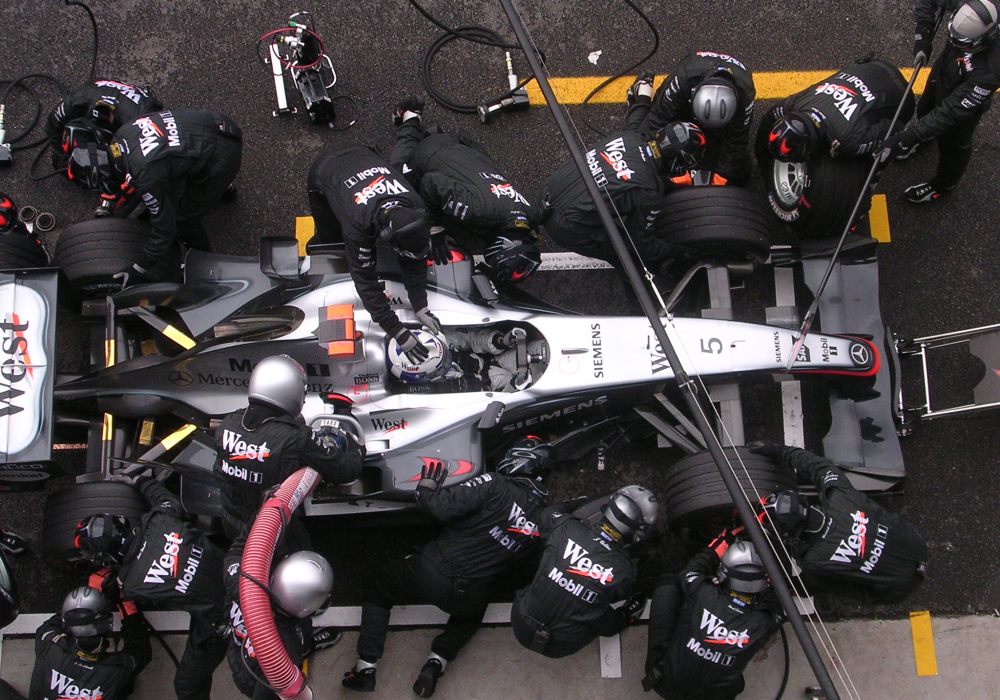
For the uninitiated, in-race refuelling has been banned since 2010 and strategy in Formula 1 hasn’t been the same since.

Pirelli introduced high-degrading tyres in 2011 and while these added some drama to F1 strategy for a few years, patience with them fell thin and change was desired.

Now, most races these days are 1-stops bore-fests and have largely been so since 2017, with a few exceptions.

In a hand-full of examples, strategy has been a deciding factor for some race wins (it’s certainly played its part in midfield battles, less so for the race win) but for the most part with 1-stop races limiting strategy options, it’s been about pure race-pace which obviously plays to Mercedes’ advantage in the last few years, being the class of the field.

Despite diverse strategies amongst the top teams being fairly non existent for years now (though, Red Bull were sometimes willing to try something different as the third fastest team and Ferrari…well, being Ferrari), the prospect of refuelling never really came up as a means to add to the strategy. Which was always a great shame because it added a strategy dynamic that F1 has missed since it was banned.

But in recent weeks the topic has come up in conversation and, it seems, there’s a possibility that refuelling could make a return in the future.

Refuelling has had its opposition in recent years, and I understand why.

We’ve all seen the famous pitlane fire of Germany 1994 and most F1 fans are fairly familiar with Singapore 2008, amongst various other refuelling related incidents across the years of refuelling.

People said F1 had outgrown refuelling. That these 2 second/sub-2 second pitstops are the new pitstop identity of F1. And for years it hasn’t been necessary. But it is now.

Look, those pitstops are great, don’t get me wrong. They are absolutely clockwork and they’re fantastic to watch. But they can’t become a reason why F1 doesn’t go back to refuelling, they can’t be the reason why F1 doesn’t have a greater strategy element, which in turn, creates better races. We’re only seeing a few of these per race anyways because of the crappy Pirelli tyres we have making the majority of races 1-stoppers.

If we’re stuck with Pirelli as F1’s sole tyre supplier for the foreseeable future and these are the type of tyres F1 is stuck with, then refuelling needs to return — there has to be more to strategy than there currently is. When Pirelli ran the high degrading tyres, there wasn’t a need because this new element was creating 2, 3 sometimes even 4 pitstops per driver per race. But that dynamic doesn’t exist anymore.

But what refuelling would also do is jumble up the grid a bit and create a bit more unpredictability.

Every weekend for years now we’ve gone into it knowing it’s more than likely going to be a Mercedes on pole position — and it’s probably going to be Lewis Hamilton. And heading into the race then, you know it’s probably going to be a Mercedes victory, because they’re on pole position and they just run away from everyone else — which, sadly, has been largely the case in 2019.

Of course there are exceptions but that’s generally how it’s gone over the years.

In the past, driver’s would start the race on the fuel load they qualified on. Bringing back refuelling would at least add some spice to Saturday’s again, even if the race itself ends up with Mercedes being on top. Let’s wander down a potentially dangerous rabbit hole…

The classic early 2000’s Ferrari vs. hybrid Mercedes debate is one that’s difficult to quantify (given the different time eras) but when it comes to refuelling, qualifying-to race, there’s a few things you can compare — one era had refuelling, one did not.

So… for reference we’ll go from 2000-2004 for Ferrari and 2014-2018 for Mercedes — both represent 5 year stretches of F1 dominance (a little less so in 2003 for Ferrari and 2018 for Mercedes, both years where both teams won about half of the races instead of, roughly three-quarters).

In 85 races from 2000-2004, Ferrari took 60% of the pole positions and won 67% of the races in that span. In 100 races from 2014-2018, Mercedes have taken 84% of pole positions and have won 74% of the races.

In addition, only 43% of pole positions were converted into wins from 2000-2004, while 53% of poles have been converted into wins from 2014-2018, so read into that what you will (there isn’t as much of a correlation to refuelling vs. no refuelling with that stat).

There’s a ton you can read into and take away from that (you can get into the whole, ‘Lewis Hamilton wouldn’t have so many poles if there was refuelling allowed’ conversation if you want) but I believe there is a correlation between the winning percentage for Ferrari being higher than their pole position percentage from 2000-2004, and I think a certain amount of this has to do with the fact there was refuelling, allowing other teams to have banzai runs to pole position, such as Jenson Button’s 2004 San Marino pole position, Fernando Alonso’s maiden pole position at Malaysia 2003, and Jaguar often got Mark Webber far up the field using a similar ploy.

There were some instances where this actually worked, such as Hungary 2003 where the short-fuelled Alonso was able to getaway in the lead while the chasing pack was stuck behind Mark Webber’s similarly fuelled Jaguar.

Refuelling also gave the high-tiered midfield teams a chance to go for a glory pole position and gave us different and surprising pole sitters/unpredictable grids — which again, helps create some excitement on Saturday’s and Sunday’s. Ralf Schumacher’s 2005 Japanese Grand Prix pole position, Toyota’s front row lockout in Bahrain 2009 — these are just some examples (coincidentally, both from Toyota).

It created more fun, and gave F1 different pole sitters — change is always good.

On the Sundays, the true pace was revealed and it was Ferrari who usually won out, but at least Saturday’s were more entertaining and at least we were left guessing somewhat heading into a race: was the qualifying pace pace or was it just a banzai run? At least it’s not a forgone conclusion that a Mercedes was going to win. At least fans weren’t resigned to their fate before lights out…

And if the top teams have to come through the field somewhat to get to where their pace is reflective of, at least there’s a few more overtakes to be had than there would be otherwise and, who knows, maybe some drama is created by an accident coming through the field?

Alternatively, refuelling adds such a dynamic on the pit-wall, and some great races have been decided in such a manner. The 2004 French Grand Prix comes to mind, where Michael Schumacher used a 4-stop strategy to beat Fernando Alonso to victory at Magny-Cours.

One of my personal favourites was the 2005 Hungarian Grand Prix, the one race where Ferrari and Michael Schumacher were on the pace in what was a dismal 2005 for the Scuderia, with McLaren’s Kimi Raikkonen using a 3-stop strategy to beat Schumacher to victory on the day.

It also means drivers can push if they know they’re coming in — they don’t have to save massive amounts of fuel and tyres if they’re coming in multiple times. One of the gripes F1 drivers have is the excessive fuel saving and tyre saving — refuelling helps take some of that away.

Again with these current Pirelli tyres, F1 should absolutely consider the return of refuelling. It adds more danger to the pit-crews, yes, and it would mean the sub-2 second pitstops are a thing of the past, but needs must if F1 wants to improve their product. And besides, if anyone is in F1 because it’s a safe place to be, then I’m not sure why they’re there.

While refuelling doesn’t solve all of F1’s problems, it certainly would help some. On its own, refuelling does not solve the competitive balance issue, but in conjunction with the 2021 regulation changes where the ultimate goal is to balance the field, I think it would help diversify the strategies and, thus, create better races and racing which is what Liberty have been wanting to do since the day they took over F1.


Red Bull’s Driver Conundrum – Today and Tomorrow

Image: @redbullracing

From 2016 to 2018, Red Bull has been been able to make a legitimate case to make when they say ‘We have the best driver lineup on the grid with Daniel Ricciardo and Max Verstappen.’

Sure, perhaps for some Lewis Hamilton and Nico Rosberg in 2016 may have topped that fresh lineup — with Verstappen obviously joining Red Bull after Russia in 2016 — but certainly for 2017 and 2018 Red Bull certainly boasted the best driver lineup on the grid in Ricciardo and Verstappen.

But even when that partnership was beginning to come under threat in 2017 — when rumours of Verstappen possibly leaving came to the fore — Red Bull still had options available to them in the event Verstappen left.

Carlos Sainz was still part of the Red Bull programme driving for Toro Rosso at the time and the highly rated Pierre Gasly was a potential option down the road having won the final GP2 title in 2016 before it became F2.

But those fears were allayed as Verstappen penned a lucrative new deal to stay with Red Bull until the end of 2020. Red Bull enjoyed a solid 2017 season with Ricciardo triumphing amidst the madness of Azerbaijan but saw much more convincing victories in Malaysia and Mexico, both won by Verstappen.

The partnership again came under threat in 2018 as Ricciardo entered the final year of his contract, with possible openings at Mercedes and Ferrari in the offing amidst the uncertain futures of Valterri Bottas and Kimi Raikkonen.

But similar to 2017, Red Bull were still in good shape should Ricciardo choose to leave.

Carlos Sainz had been loaned to Renault in 2017 as part of an agreement in the whole McLaren-Renault-Toro Rosso-Honda deal that saw McLaren ditch Honda for Renault, with Honda heading to Toro Rosso, Sainz heading to Renault for 2018 (which was eventually brought forward to the remainder of 2017).

It was made very clear at the time that Sainz — who was ready for something larger than Toro Rosso after nearly four seasons — was on loan from Red Bull, so the cards were still in Red Bull’s hands when it came to his future and provided an insurance policy should Ricciardo leave.

Sainz’s departure at Toro Rosso allowed Red Bull to finally bring Pierre Gasly to F1 in late 2017, and after some very average showings in the latter stages of 2017 Gasly turned heads with his 4th place finish in Bahrain in 2018 before enjoying a successful first full season in F1.

When the shock decision from Ricciardo to join Renault for 2019 was announced, Red Bull were still in a good place with both Sainz and Gasly to choose from as well as highly rated youngster Dan Ticktum waiting in the wings for a Toro Rosso drive — all three gave Red Bull the choice to choose from within their own programme, which is what Red Bull prefer to do and were always going to do for their 2019 vacancy (as fun as Fernando Alonso would’ve been in that car).

While Sainz had proven himself as an F1 mainstay in his first four seasons, Gasly had shown superstar potential in his first full season, regularly outperforming what his car was capable of and in some cases beyond that — finishing 4th in Bahrain, 7th in Monaco and 6th in Hungary to name a few.

While Sainz had more experience than Gasly, that was exactly what separated his case from Gasly’s for the Red Bull drive: experience, history.

Having entered F1 together back in 2015 with Toro Rosso, the whispers were that Helmut Marko was reluctant to pair Verstappen and Sainz together again at Red Bull after their difficulties as teammates at Toro Rosso — Sainz’s history playing to Gasly’s advantage — i.e. Gasly’s lack of history.

In the end, Red Bull chose Gasly for their 2019 vacancy.

A supposed (and I want to emphasise that word) clause in Sainz’s contract with Red Bull that stated that if Sainz was not racing with Red Bull by 2019, he would be free to choose his own team. With Red Bull wanting to block Sainz’s permanent move to Renault — the French outfit enduring very tense relations with Red Bull — it not only allowed Renault to sneak Ricciardo away from under Red Bull’s nose but left Sainz without a seat for 2019, Ricciardo replacing Sainz and Red Bull obviously choosing Gasly for its vacancy. This left Sainz free to pursue the vacant McLaren drive left by Alonso and with confirmation of that deal it freed Sainz from the Red Bull programme.

So, Sainz was gone but Red Bull had the promising Gasly to look forward to pairing with Max Verstappen in 2019 with new Honda engines and with Dan Ticktum coming along, things seemed to be progressing at Red Bull. There were no regrets, not from Red Bull and not from Sainz, who was indebted to Red Bull for his career.

But Red Bull suffered a minor setback.

Ticktum’s road to F1 was proving to be tricky, with the Englishman finding difficulty  acquiring a super licence, with matters not being helped after he intentionally took another driver out in a junior category race in 2015.

After recovering from that after being handed a two-year race-ban (with the second year being a suspended ban), Ticktum found himself leading the Formula 3 championship in 2018 but saw his title challenge slip into Mick Schumacher’s hands, with the German eventually winning the title and securing his road to Formula 2 at the expense of Ticktum’s hopes for a super licence.

It all ultimately meant that Red Bull turned to Alex Albon to fill one of their Toro Rosso vacancies for 2019, which seemed less than ideal to Red Bull at the time, who were very high on Ticktum and wanted him in an F1 car, their hopes of having him participate in mid-season testing in 2018 shot down by the FIA.

Still, plenty of reason for optimism ahead of 2019 despite that minor setback — new promising driver in Pierre Gasly, new Honda engines…

There were high hopes for 2019.

But things…haven’t gone according to plan.  Well, they have from Max Verstappen’s side.

While Red Bull are further from Ferrari and Mercedes than they would like to be, the Dutchman has consistently punched above his car’s weight and has been mixing it up with the Ferraris are more than a few occasions this season, recently taking a stunning victory at Austria.

Pierre Gasly…hasn’t enjoyed the same success.

Gasly has been consistently a long way off of Verstappen’s pace and has often found himself either eliminated in Q2 or Red Bull having to use the soft tyres (and probably their Q3 party modes in other instances I’m sure, which they would never admit) to advance to Q3 whenever the top two teams and Verstappen have used mediums to advance to Q3.

In the races themselves, again, Gasly has been nowhere — not only finishing behind his teammate in every race they have finished so far this season, but has found himself at times behind the likes of the McLaren’s, Renault’s, Sergio Perez and even Dany Kvyat’s Toro Rosso in Australia. Not all at once, mind you…he’s not that bad.

Now, to be fair, Gasly had a few good races — well, two, really, come to mind. He finished 5th at Monaco and was on course for a good result in Azerbaijan before retiring with a mechanical issue.

Most recently in Austria, Gasly looked like he was on the pace in practice, and though, it was only in practice, he showed signs maybe that this weekend was going to be the one where he could at least finish 6th again.

In other words, back where he always should’ve been.

But when it came to getting the job done in qualifying, with P5 up for grabs with Sebastian Vettel’s problems in Q3 and with everyone running on the same soft compound, Gasly qualified P9 — last in Q3 since Vettel never got to set a time — behind Lando Norris, both Alfas and Kevin Magnussen.

And when the race came and Verstappen’s awful start allowed Gasly to pass his teammate on lap 1. This was, of course, very temporary and Verstappen quickly re-passed him and then only went and won the race, lapping Gasly in the process in what was, emphatically, the worst result of Gasly’s disastrous season so far — a lap down behind the race-winner (that wasn’t a first for Gasly this season) but his teammate in the same breath.

Austria is a short track, mind you, but there is no excuse for such a result.

Why Gasly has struggled so much is hard to say but what’s easier and fair to say is that Gasly has, so far, failed to live up to expectations after his stellar 2018. In fact, there probably hasn’t been a disappointment bigger than Gasly (well, besides maybe Mercedes having dominating again at the front).

If this was 2016 and there was a Max Verstappen or a Carlos Sainz waiting in the wings at Toro Rosso, Gasly might have lost his seat already. It certainly took a run of form that wasn’t nearly as bad for Daniil Kvyat to lose his seat after four races, despite a podium at China. Though, to be fair, Kvyat already had a full season where he found himself behind his teammate too.

But between having no ready replacements at Toro Rosso — and Red Bull extending some grace — it seems Red Bull are going to continue with Gasly, at least for the moment and for 2019.

But should he continue on as he has all season so far and shows no sign of picking up the P6’s that he should be collecting at the very least (let alone ever hoping to challenge Verstappen), Gasly is going to leave Red Bull with no choice other than to replace him, whether it’s at the end of 2019 or a situation similar to Kvyat where a quick change occurs after a few races into 2020 should things not go to plan.

But the question would be ‘with who?’

Carlos Sainz is no longer an option, enjoying a fine season with McLaren so far (while enjoying some of the company perks along the way), having finished ahead of Gasly on multiple occasions this season despite the McLaren being slower than the Red Bull on outright pace.

Incidentally, can you imagine how Red Bull’s season would be going if Sainz was in that car instead of Gasly from the start? I’m not saying Sainz is banging through the field to take the win at Austria or beating Verstappen, but you’d imagine he’s certainly finishing 6th at the very, very least. With Verstappen ahead of both Ferraris in the championship standings after Austria, it begs the question how close could Red Bull be to Ferrari in the constructors standings if they had a competent driver in their second car?

Anyways, Sainz is no longer an option for Red Bull — the best option Red Bull would’ve had but they made their choice. Hindsight is 20-20 but alas…

Both Toro Rosso drivers are enjoying solid seasons — despite the car sliding back on the grid somewhat of late — but do Red Bull really roll the dice with Kvyat again? I like Kvyat but long term in the Red Bull? I’m not sure Red Bull goes down that road again.

Alex Albon has looked good in his rookie season — better than I think pretty anyone could have expected — but Red Bull are surely going to be wary with rushing into early promotions. In both previous examples their hands were forced as Kvyat and Gasly were probably promoted a little sooner than planned as both Vettel and Ricciardo surprised Red Bull with their exits.

Gasly has clearly shown he isn’t ready for the big-time right now, and him falling flat on his face so far can’t have inspired any confidence for Red Bull to just replace him with Albon after one season of experience. They could, but having seen how this Gasly experiment has gone so far, it surely doesn’t help decision making

I’m not saying Albon couldn’t go in to Red Bull after one season and perform, just that Red Bull will surely be wary, especially seeing Gasly just slide. So, perhaps Albon could be an option down the line if he continues to impress but perhaps not as soon as next season? If Gasly is kept for 2020 but replaced after a tough start, Albon would have similar experience as Verstappen did when he made his jump to Red Bull in 2016, which is an interesting thought.

Dan Ticktum’s future as a Red Bull driver has also seemingly gone down the drain as he was released from the Red Bull Driver Programme in late June, having lost his backing for his Super Formula drive where had been hoping to earn the final few points he needed for his super licence.

So, that avenue for the future is now seemingly gone with Ticktum’s place in the Red Bull programme seemingly now taken by Pato O’Ward — in addition to O’Ward taking over Ticktum’s Super Formula seat, who recently debuted in Formula 2 as a one-off and is making more and more noise within the Red Bull academy.

Red Bull had been keen to get Ticktum into F1 but after a poor start to his Super Formula season, maybe saw too much of a hurdle for him to acquire his super licence? Either way, they have to take a step backwards with driver readiness with, O’Ward seems to be a ways off of Formula 1 — we’ll see what his Formula 2 situation is later this season, if he participates any other events this season.

So, where do Red Bull go from here?

Their prospects from within maybe aren’t viable in short-term. Albon is probably the closest thing to being ready but maybe not as soon as 2020.

If Red Bull wanted to do go in a different route for the future, they could perhaps groom Nobahru Matsushita — Honda’s junior driver (aged 25) in Formula 2, recently taking a great race win in Austria — for a Toro Rosso drive, and maybe see how that goes? Certainly an interesting option — and that link now exists between Red Bull-Toro Rosso-Honda — but not one that solves Red Bull’s problems today…or for 2020.

Again with Kvyat, is that something Red Bull want to go with again? He’s only 25 years old with plenty of F1 experience, but do Red Bull roll the dice with him again?

Maybe Gasly can turn it around, whether it’s this year at Red Bull or back at Toro Rosso if he is sent back. For all Gasly’s faults this season, he’s still young. There’s always time to bounce-back, Daniil Kvyat is showing that — even after a year’s absence.

Red Bull’s best option both short and long-term was Carlos Sainz, and I would be hesitant to say he’ll come running back to the Red Bull family — he’s very happy at McLaren, and why wouldn’t he be, especially with McLaren back on the rise.

So, the options within perhaps don’t suit for 2020 and Red Bull, generally speaking, don’t hire drivers externally — it’s obviously happened at Toro Rosso with Brendon Hartley (who had some previous ties with Red Bull) and Kvyat technically wasn’t part of the Red Bull programme when he was signed for Toro Rosso for 2019, but generally speaking it doesn’t really happen.

Mark Webber was the probably the last instance, and even then he had some history — racing for Jaguar, which later became Red Bull.

But they might have to go the external route this time around. And if they are going the external route, it makes sense for them to hire a driver who is a bit more experienced, a bit more short term if they want to either wait a bit on Gasly to return to what Red Bull signed in the first place/Albon or O’Ward down the line.

Nico Hulkenberg fits the bill perfectly — even if it’s just for a year or two until Albon/Gasly are ready. No one doubts Hulk’s abilities and there wouldn’t be a single person who wouldn’t be happy to see him in a car that can finally deliver him that elusive podium.

Valterri Bottas — a race winner — wouldn’t be an awful choice either should Mercedes decide they need Esteban Ocon back in F1/should they want to move on from Bottas. Unlikely but interesting to throw out there. Throw in Checo Perez too as another unlikely possibility.

If Red Bull decided to go somewhere in between mid/long term, (possibly preparing for a Verstappen exit), Kevin Magnussen would be a really interesting choice. It provides Red Bull with a good option to go with Verstappen right now and also leaves them in a decent spot should Verstappen leave and they promote Albon/Gasly to replace him.

Again, it’s worth saying that none of these are likely because Red Bull do not like going outside their walls if they can avoid it for drivers but their need may force them to… And it’s going to be fascinating if they do, who do they select?

Whatever Red Bull decide to do, their choice has been so much harder for themselves because they got caught up in one year of Pierre Gasly and forgot about the consistent, steady and quality performances over the last four years from Carlos Sainz — with multiple teams.

Four years is a large sample size — Sainz proved he belonged in Formula 1, that he deserved to stay not because he was part of someone’s programme but because he’s a damn good racing driver.

But look, it’s obviously worth saying that Gasly is even half the driver Red Bull chose to promote last year, their choice will be justified and everything I’ve mentioned above completely pointless…but that just hasn’t materialised yet with Gasly.

Christian Horner has been on record saying that they want to support Gasly and that there won’t be a change this year but you can tell that patience is wearing thin, and that was before Austria.

What Red Bull do with their second driver is a problem for them to think about in the short term, their long term future may also extend to their first driver too — Max Verstappen.

If Verstappen leaves after 2020 — and Gasly doesn’t recover/become the driver Red Bull hired him to become — Red Bull are in real danger, for the first time probably since 2008, of not having an elite driver partnership and this is something they need to be thinking about right now and thinking about hard, because 2021 is not far away.

O’Ward might become something and be ready by 2021 — for Toro Rosso at the very least — but outside of him and Albon, what do Red Bull do if Verstappen leaves? What is their driver future long term? What was once a nice clear reflection is now a murky labyrinth.

What if Gasly never becomes the driver Red Bull envision him to be? What if Verstappen, a super competitive driver, decides that he’s sick of not competing for titles, swaps Red Bull for Mercedes or Ferrari? Is Red Bull’s long-term driver future dependant on Alex Albon becoming a far better F1 driver anyone everyone could have ever anticipated? That’s a question that Red Bull certainly won’t have asked themselves in early 2018, when they had both Ricciardo and Verstappen, Pierre Gasly on the rise and Dan Ticktum — spoiled with choices in the present and the future.

They may be celebrating a fantastic victory at Austria but Red Bull have a lot of questions to ask themselves when it comes to their driver lineup for 2020, and possibly beyond…


F1 2019 Season Preview

Feature image: Twitter – @F1

It’s finally here, Formula 1 2019. It’s taken a long time to get here but we are here, the start of it all again.

And it promises to be a fascinating season in prospect, with the gap between the top three teams seemingly as tight as ever, if testing is to be believed (always a dangerous thing).

Let’s break this title down between the top three, the midfield and then those near the back. In the process, I’ll touch on the drivers and the such, before making a few predictions and the such.

We’ll have fun.

The Top Three

Everything in testing should be taken with (many) grains of salt but, listening and reading the thoughts of people — well-informed people — who were there at Barcelona and the experts that were there, it would seem that Ferrari are the early team to beat.

It’s tough to gauge Mercedes in testing because they generally stick to their own programme and tend not to really care about what anyone else is doing, but when you hear the quotes from the drivers being unhappy with the balance and Mercedes bringing a heavily revised car to Week 2 of testing and another revised car to Melbourne, it would seem to suggest they’re on the back-foot (something Lewis Hamilton reaffirmed on Thursday).

I do think Mercedes are closer than people think but if they haven’t fixed their balance issues, it’s going to be a difficult opening for them in Melbourne if they can’t get on top of that quickly.

Ferrari, in comparison, seemed pretty happy with testing — at least in Week 1, all smiles with Vettel and company, though, the second week wasn’t as good as the first, they still set the fastest lap in testing and, according to those who are in the know, Mercedes’ fastest lap of testing wasn’t a true reflection of the gap between the two teams — the lap times suggesting that things are closer than things would appear.

We’ll see what happens but the Scuderia look good.

Red Bull look really intriguing, they’re a team that could easily spring a surprise at Australia, and some think they could be right there with Mercedes.

It’s hard to say where they will fall, we didn’t really see their true pace during Test 2.

They always build good cars but have been left wanting in the power department since 2014. Now armed with Honda engines, they enjoyed good reliability (Pierre Gasly letting them down in Spain more so than Honda) and I think there’s some genuine optimism for the Red Bull outfit.

It’ll be one of two things for Red Bull — they’ll either spring the biggest surprise in the paddock if they can turn up quicker than Mercedes, or we’ll see how much sandbagging has actually taken place between Ferrari and Mercedes and Red Bull will, again, be a distant third.

We’ll see.

Out of the top three teams, only Mercedes retained their driver lineup of Lewis Hamilton and Valterri Bottas.

Hamilton comes in as a five-time champion and coming off one of the most consistent seasons I’ve ever seen — I’d imagine he’s in a good place.

It’s a different story for Bottas, who — from race number one — I’d imagine will be under pressure. He’s technically out of contract at the end of this year and Esteban Ocon is lingering, waiting for a seat to present itself. F1’s infamous politics kept Ocon — a member of the Mercedes driver programme — out of a seat in 2019 but a repeat of last season for Bottas would surely result in a change of drivers for 2020.

Bottas was unlucky in many spots last year (Baku, France etc.) but he was poles apart from Hamilton when it counted. If he’s in the title hunt after seven, eight races, Mercedes will probably let them at it — as they’ve historically done when their two drivers have been in genuine contention for the title. But if Hamilton has a significant advantage — as he did last year — you can only see it swinging as it did last year with Mercedes giving their backing to Hamilton.

Bottas says he’s ready and raring to go but we’ll see how he responds in Australia — a track where, of course, he binned it in a major way in Q3.

At Ferrari, it’s a case of ‘out with the old, in with the new’ as Kimi Raikkonen makes way for Charles Leclerc.

Where Mercedes let their cars race — for the most part — Ferrari have held preference in terms of drivers for a while now: it’s Sebastian Vettel > teammate.

Ferrari have been back and forth in their comments about letting the two race and whether Leclerc is a number two or not… It’s all words at Ferrari but until we see it in action for sure, nothing that has been said matters — that’s the reality of it.

If Leclerc gets off to the dream start and beats his teammate in Australia and is ahead of Vettel in the standings, say, after Spain, it’ll make for a fascinating situation at Maranello.

I ultimately think that Vettel’s savviness and experience will edge Leclerc in his first season at Ferrari, and I think this year could prove a learning experience for Leclerc about what it means to be a Ferrari driver, what it means to win races and it means to have every mistake/inconsistency scrutinised.

It’s a pressure he’s never faced before.

That’s not to say he can’t be in the hunt and take it to Vettel — I’m sure he will at times. But over 21 races, everything would point toward Vettel edging Leclerc — experience, savviness and his position in the team, which matters massively at a team like Ferrari.

Their car looks incredibly promising but the issue with Ferrari is their development throughout the season. They had to go backwards to go forwards, shedding the upgrades they had placed on the car from Singapore onwards off at USA and boom, the car was back at the front.

Mercedes, in recent history, have been able to out-develop Ferrari over the course of the season, so if Ferrari have an advantage they need to maximise it in the first few rounds before Mercedes bring those upgrades. Ferrari having their upgrades actually work would also help…

Red Bull officially made Max Verstappen their number one driver as Daniel Ricciardo moves on to Renault. Pierre Gasly arrives from Toro Rosso very much as a number two driver.

I’m not a huge Gasly fan and I think he will struggle against Verstappen.

That pairing is going to be explosive and not in a good way. Danny Ric was great for Max and those two personalities got on well even after a clash or two, they could at least exist but if Max and Gasly come together, you’d fear the worst, and I think those two aren’t going to like each other and it’s not going to take long for that happen.

A personality clash waiting to happen.

Red Bull themselves are an interesting prospect. We have no idea what to expect other than they’ll probably be in the top three. After that, who knows? They do develop quite well historically, so if they’re close to Ferrari and Ferrari have another development disaster, it’s going to be interesting.

The Midfield

The midfield battle looks as tight as ever, and it’s hard to say who’s leading the way.

It’s very unpredictable.

McLaren went for some headline laps in testing, so it’s hard to say where they’re at whereas Racing Point’s car in testing is going to be very different to one we see at Australia — so it’s tough to say where those two teams will figure amongst the pack.

Haas had a mixed winter but whispers are they’re looking decent but I’d imagine the top two in the midfield will come between Renault and I think Alfa Romeo could be in the mix. Their front wing design is one that everyone is talking about and I think they could easily mix it up with Haas and maybe Renault but I’m a bit skeptical about that one.

Toro Rosso, I’d imagine, will be in the lower part of the midfield but there’s optimism for them after a strong testing. Perhaps they could be duking it out with McLaren, we’ll see.

Speakng of, McLaren is where arguably the most change has occurred as both Fernando Alonso and Stoffel Vandoorne exit, and Carlos Sainz and Lando Norris come in. Sainz will be fine, he’ll do well. I don’t think there’s any need to worry there. It’s Norris where the unpredictability lies. I like Norris’ superstar potential. I think his ceiling is higher than George Russell’s but I think his floor is lower.

What I mean by that is I think there’s a greater potential for stardom in Norris but more chance of Norris being a bust. There’ll be ups and downs for Norris in his rookie season but I think he’ll be OK — I do expect Sainz to better him in his rookie season though.

Alfa Romeo have also changed their lineup, replacing the outgoing Leclerc and Marcus Ericsson with Kimi Raikkonen and Antonio Giovinazzi — old and young. Raikkonen is a great addition and I think he’s going to enjoy a somewhat resurgent season, even though I thought he had a good season last year. But he’s free of Ferrari. Free of ‘number two status’, free of the awful strategies Ferrari put him on to help Vettel/hamper Mercedes. As a team leader, I think Raikkonen will have a strong season.

Giovinazzi is already under pressure due to his past. He filled in in 2017 for the injured Pascal Wehrlein and binned it on both occasions when it mattered, as well as binning it in Hungary too in a test with Haas. He’s got to build some consistency and I have no idea what to expect.

All change at Toro Rosso too, as Daniil Kvyat returns and Alex Albon is promoted from F2. I like Kvyat and I think he can have a bounce-back season but I think Albon has a tough season ahead and, with the exception of perhaps Lance Stroll, there’s a chance Albon is the worst driver on the grid — never even setting foot in an F1 car until testing.

Speaking of Lance Stroll, he joins the newly named Racing Point team alongside Perez. Perez should smoke him, I don’t believe in Stroll at all but let’s see. Their car is going to be interesting, let’s see where they’re at with this new car in Australia, again, vastly different from the one we saw in Spain.

Haas were one of the few teams to stick with their driver lineup, in fact, the only Haas and Mercedes are the only teams to retain their lineups in 2019 with Romain Grosjean and Kevin Magnussen. Magnussen is in good shape but there’s a lot of pressure on Grosjean after his mixed 2018. He’s a good driver, for sure, but is prone to mistakes so if he can iron those out, he should have a good year because the car I think could be promising out of the box.

Renault are an intriguing prospect and I think boast one of the better lineups in Nico Hulkenburg and Daniel Ricciardo.

It’s going to be an interesting year for Hulkenburg.

Many thought (myself not included) that Sainz would come and slap Hulkenburg but it never happened, Nico acquitting himself very well in that battle, besting Sainz in the end. But Ricciardo will be a different beast. As long as he can match, even if he finishes a few point behind Ricciardo (reliability depending, of course), that’s a successful season for Hulk.

In terms of Renault themselves, even if they don’t start out fourth quickest, I thoroughly expect them to end fourth quickest. How close can they get to the top three? I think they’ll be closer but not close enough to compete for podiums on raw pace.

The Rear

Williams, I’m afraid, look a long way off everyone else after their disastrous start, missing the majority of the first test in Spain.

Robert Kubica returning to F1 is a great story but it’s probably not going to be a great year for him in terms of the machinery he has underneath him to work with — he already seemed fed up with the car in Spain in testing. It might be tough to measure Kubica’s season against rookie George Russell, given that Russell, well, is a rookie.

If Russell completely out-paces him, it’s going to be tough to say whether Russell is legit or if coming back to F1 was one step too many for Kubica, faced with physical limitations no other driver has to deal with after his rallying accident in 2011.

I’m hopeful Williams will be better than advertised but it’s not looking good. The car looks great in terms of its livery but in terms of performance… Yeah… Sorry.

Awards/Predictions

Let’s get into the fun stuff. Awards and predictions.

Driver’s Champion: Sebastian Vettel

Constructors’ Champion: Ferrari

Best of the Rest: Renault

Surprise of the Season: Alfa Romeo

Best Rookie: Lando Norris

Most Improved: Daniil Kvyat

Most Disappointment Driver: Pierre Gasly

Most Disappointing Team: Williams

Best Livery: Ferrari, their matte finish and the added black really stand out. What a gorgeous car.

Worst Livery: Racing Point. I like the pink but the blue they added is in the wrong places, and it just doesn’t look great.

Best Helmet:

The most important one of the lot. Here are the helmets, put together fantastically by Racefans.net:

racefansdotnet-f1-drivers-helmets-2019.jpg

Lewis Hamilton’s is great this year, Lando Norris’ is great too as is Charles Leclerc’s.

I’ll say Danny Ric though — just way off the beaten path but looks fantastic — the most wild one out there.

Worst Helmet: Pierre Gasly. Hands down. Awful. There’s 1000 better ways to incorporate the French flag in your helmet, Romain Grosjean does a good job if it but this is awful…


I can’t wait for it to all unfold.

F1 2019 promises to be the most exciting season in recent memory. May she live to the hype.

Let’s go.

Why Persona 5 Became my Favourite Game of All Time

(If it wasn’t obvious, there’s going to spoilers for Persona 5 here. So please, if you’re still playing it or haven’t finished it, please don’t read this)

Gaming is part of who I am. Ever since I’ve been young, I’ve loved gaming.

It always provided me with an escape from reality and an opportunity to delve into a fantasy world/setting where my imagination and mind can run free and dream. Where I could spend endless hours of enjoyment and enjoy the creation of someone’s imagination through the splendour of a great story or gripping gameplay – and in some cases, both.

But such an occurrence is rare — usually it’s one or the other. Or, perhaps one of one and a half of the other. The gameplay could be fantastic but maybe story doesn’t add up to that level — or visa-versa.

For example, I love Horizon Zero Dawn. That’s an amazing game, truly one of my favourite games in terms of gameplay, mechanics and its overall functionality – it’s an absolutely amazing experience. Almost perfect to play. But the story isn’t quite on the same level. The story is good, don’t get me wrong. It just didn’t grip me the way the gameplay did. I was left wanting a something a little different in the end.

Look, don’t hear what I’m not saying. I love that game and would recommend it to anyone and it’s one of my all-time favourites, but the story couldn’t match its incredible gameplay.

But I played a game recently that did keep up in all areas: Persona 5.

I actually first saw the game when I was over in America in February 2018 when I was at a friend’s house and saw her playing it. It looked interesting but did nothing more for me than that at that moment.

The part of the game she was playing was when Ann Takamaki discovers her Persona — so the part with Kamoshida in his gown and pink, um, undies and the such… At the time, I didn’t realise that my first viewing of the game was not a normal part of the game but more so a rare occurrence — not every day in the game does someone discovers their Persona…

But I didn’t let what would’ve been an odd scene to someone seeing it for the first time with no context stand in the way of my initial impressions: it looked interesting. Certainly, the art direction and its main colour of red got my attention.

Anyways, fast forward to near the end of 2018 or so. I’m spending time with some friends and one of them mentioned Persona 5, and I at least knew of its existence at this stage and had seen enough to have a little conversation about it and he mentioned that it was an amazing game.

All of these things intrigued me enough to check it out on the PSN store to see what the story was.

Sure enough, there was a sale for the game and it was going for 40 euro. Before I committed to that price, I had a quick look at some of the ratings/reviews to see what others thought of it and it received really positive scores: IGN gave it a 9.7.

Now, IGN’s ratings have been known to be odd from time to time (see: Pokemon ORAS) but to throw out a 9.7 on a game that looks styled and fashioned like a Japanese anime — and a game mainstream gamers would never play or could appreciate — is a rarity.

So, I bought it and hopped in not knowing a thing about Persona 5 or the Persona series (I had at least heard of the Persona series but no more than that) and little did I know what adventure would lie before me.

Not only did Persona 5 leave a lasting impact on me, but it would end up becoming my favourite game of all time.

For the longest time, the original Ratchet and Clank held that mantle. I’ll love Ratchet and Clank forever, and the original boasts a wonderful sense of adventure, humour — among many other things. It’s the game I know off of by heart and could play with my eyes closed, tell you where all the secrets are etc…

That’s my jam.

The original quartet of Ratchet and Clank games for the PS2, Horizon Zero Dawn, Skyrim, Shadow of Mordor, the original Need for Speed Most Wanted, Need for Speed Carbon, Tony Hawk’s Underground, Harry Potter and the Philosopher’s Stone for PS1… These are some of my other favourite games. 

Some timeless classics in there, future classics and some games that wouldn’t mean a lot to anyone else other than myself.

And now Persona 5 has climbed to the top of that list, ahead of games I’ve spent countless hours and have known, in some cases, for well over a decade — heck, nearly two decades when it comes to the original Ratchet and Clank quarted for PS2.

How did this happen? What was it about Persona 5 that caused this?

One of the biggest things for in Persona 5 me is the story.

It’s obviously extremely well thought out, well written and it always kept me guessing. I was never sure how exactly it was going to go or wind up.

But there’s the story itself and then how one tells a story.

For the majority of the game, the game goes back and forth between past and present as you recall your past events to prosecutor Sae Nijiima after your arrest in the game’s opening sequence, in what is the present-tense/present day.

I do enjoy this method of storytelling, especially in Persona 5 and the way it’s handled. Well, that is once you get used as to when and why you go from past to present, because at first it can be a little confusing.

When you reach the, I guess, ‘next chapter’ of the story, you’re returned to the present to help set the table for what’s going to happen in the story — for example, you know who your next target is but don’t know how you get to that point when you see it.

The instance of going from present to past is when you create a bond/establish a relationship with a character (referred to as ‘confidants’), as you’re recalling your memories to Sae.

As you go from past to present, Sae asks how about key members of your journey and what their role with assisting you and the Phantom Thieves was — which, of course, you already know once you establish that confidant, for example, Kawakami helps you skip classes which allows you extra time to do a variety of things.

I really enjoyed that method of storytelling but if you haven’t played the game before it can get a little confusing.

Another thing I loved about Persona 5 was its length.

Generally speaking, I love games that are long but that comes with a condition: it can’t be long for the sake of being long — there needs to be substance to the length and it’s not just long for the sake of being long. Meaningful length.

For example, The Legend of Zelda: Skyward Sword is a long game, and it’s unnecessarily long.

Alright, here’s a basic synopsis of Skyward Sword.

You have your first visits to Lanayru Desert, Eldin Volcano and Faron Woods and then, during your second visits to each area, you explore a brand new area that you didn’t on your first — new skills/items to be applied and applied etc.. Cool.

Then, you have your third visits to each area but there’s no new area to be found but instead it’s the conditions/environment that have changed (though, that isn’t totally true for Lanayru where you do, kind of, explore some new ground).

The reason behind your third visit to each area is to search for the Song of the Hero, key to unlocking the last temple. The whole chase for the Song of the Hero is too long — too many rings to jump through for a measly song. And during that time, little story development actually takes place — you’re just going to get part of a song in each dungeon/area. Nothing new is really revealed in this time in the game’s story — it’s just spending HOURS doing things like collecting tadnotes under the water for one part of a song. There’s no story development, that’s it. You’re assembling a song.

That part of the game feels repeated, it feels arduous and it drags on and you’re truly ready to be done with each region when it’s over — after all, how excited can you be about returning to the same three areas throughout your incredibly long adventure while not being able to fast travel on the ground? It takes its toll.

But these are feelings that I never got that feeling with Persona 5, even as the hours racked up — 50, 60, 70, 80 hours later I never felt as though the game was dragging. I was always fascinated by the direction the game was going, where the story was going, and you were still exploring new areas, all the way to the end. New things were always coming to light and not for the sake making up things — it all feels connected. Even when you get to the Mementos Depths and while Mementos itself is nothing new (arguably, the one area of the game that does feel like it drags on but you’re never there for too long and it’s rarely required), it’s drastically different to anything you’ve seen of/in Mementos up to that point.

With the story as a whole, you just take it all in your stride — the ups, the downs — but the really big plot stuff starts to go down after you complete the sixth Palace of the game: Sae Nijiima’s Casino.

When you complete Sae’s Palace you really feel things have come around full circle, as the escape from Sae’s Palace is where you begin the game originally — the failed heist.

But this time, you now know almost everything that has happened in the build up to your arrest (how you became a Phantom Thief, the people whose hearts you changed etc.), so when you go sacrafice yourself — which you didn’t know first time around — in order to ensure your team escapes, there’s a certain heaviness when you repeat the opening scene again, because you know what’s coming and you don’t know what happens after this point. You now know how you ended up where you are but now it’s all truly into unknown. It’s the same kind of heaviness that you feel when you see the casino interior the first time you see the inside of Sae’s Palace and recognise that this is the same casino that you know your eventual arrest is coming in. A sense of ‘what goes wrong here?’.

But one difference between the beginning of the game and this time is that you’re greeted by your starting Persona, Arsene, which did not happen in the game’s opening sequence.

You fuse away Arsene very early in the game, so seeing him again was very cool after all of this time, but his reunion is not one of happiness but of duty and he implores Joker to ‘recall’ his friends and his bonds, as his ‘fate will be determined soon’.

Having played the game, I’m sure you know that there are multiple endings — and multiple bad endings at that — and you’ll be greeted with one of them you sell out your friends to Sae in the interrogation, but you are told you would see Arsene again if you ‘fated to continue past this point’ if you follow his drift — in other words, you’ll see him again if you’re not an asshole and you don’t sell out your friends.

I really like Arsene and the fact he knows what lies ahead of you and that the moment that arguably, changes everything in the game (if not, it’s at least one of the most defining moments in the story) is coming — I just really loved that part. He knows what he knows and there’s a ‘I’ll see you on the other side’ kind of element to it, which I personally really love.

Though, I’m not sure anyone could’ve expected what happens after you finish wrapping up your testimony to Sae, who, throughout the game, slowly comes around to the truth as Joker’s testimony lines up with some of her thoughts and theories, even though they makes no earthly sense.

Well, I’ll rephrase somewhat. When you’re arrested, you’re told you’ve been betrayed by one of your team members. As you progress through the story, there’s no question in your mind that anyone in your team — Ryuji, Ann, Morgana, Makoto, Yusuke, Futaba, Haru — would ever betray you. But what you didn’t know when the game started was that Goro Akechi — a detective with a Persona of his own — was a late addition to the team, joining only to take the Treasure from Sae’s Palace and joined with the condition that the Phantom Thieves disband after the job was done, threatening to expose the identities if they refused his offer. With how he joined the Phantom Thieves in the first place through blackmailing them and being someone who has spoken out against the Phantom Thieves throughout the story, you were always a little suspicious of him when he joined and it wasn’t really a surprise when you learned he was the traitor that sold out the Phantom Thieves.

Once he reveals his true affiliation, he kills who he believes is the leader of the Phantom Thieves in the interrogation room after Sae leaves and you’re left to believe for a minute that you’ve chosen the bad ending (which you get if you sell out your friends when Sae asks you to confess the names of the other Phantom Thieves).

Of course, as it turns out, this is not the bad ending, and that Akechi only killed a cognitive replica of Joker — all part of a plan to trick Akechi, who the Phantom Thieves knew joined with ulterior motives from the get-go (which is revealed after the event itself).

I loved the twist that the Phantom Thieves actually knew Akechi joined with ulterior motives the start and how they knew something was off; flashing back to a conversation that took place many, many hours ago — and, in-game, months beforehand — and one certainly most would’ve forgotten or disregarded. It was during a school trip to a TV studio where Akechi overheard talk about pancakes, which came not from Joker, Ryuji or Ann but from Morgana, the cat.

As we find out, only people who have been into the Metaverse can hear Morgana speak in the real world — to everyone else, he’s just a normal cat meowing.

The plan to get caught at Sae’s Palace, placed into the interrogation room, earning enough trust from Sae to go along with a plan she had no idea was taking place and show Akechi Joker’s phone, which would place him in the Metaverse — where the interrogation room is the same in reality as it is in the Metaverse – thus, leaving Joker to twiddle his thumbs in the real world as Sae saves him and smuggles him back to Leblanc while Akechi believing he killed the real Joker. It was so well thought out and I had to go back and watch how the whole thing played out again on YouTube to try make sense of it again.

Sae’s Palace was the sixth in the game, the Palaces being the main dungeons/temples in Persona 5.

The Palaces themselves were really cool, touching on so many different themes based on the ruler’s distortion. Arguably, they started the game off with the worst Palace with Kamoshida’s Castle. It’s just a slow climb up without a ton of puzzle solving aspects to it (at least the music was great), whereas Madarame’s, Kaneshiro’s, Futaba’s, Okumura’s, Sae’s and Shido’s Palaces are filled with a ton of puzzles and are just much more interesting Palaces than Kamoshida’s.

Futaba’s was one of my favourites, not just because of the music but because her set of circumstances as to why you’re in her Palace to begin with was so different from everyone else. And seeing her story and tragedy told as you progress through the Palace was very moving.

Kaneshiro’s Palace was really interesting puzzle-wise but, I think, unlike the other Palaces, you kind of stumble on the end of it whereas you knew with the others where the Treasure was. For me at least, it was just getting to the middle of the that giant vault and expecting more after solving the puzzle and getting to the middle, only to take the lift down and see the Treasure floating in mid-air and go ‘Oh, this is it.’

The Palaces music was usually great. The only Palace that was left really lacking in the music department is Madarame’s, and I guess the first theme in Kaneshiro’s gets a bit repetitive, but it is catchy.

The music in general in Persona 5 was something I thoroughly enjoyed. From the start when you’re greeted with ‘Life Will Change’, from the main overworld theme and to the final credits… Just a wonderful soundtrack. I can’t say enough about it. From conveying urgency, humour, to the battle themes, Palace themes…absolutely fantastic.

The story progresses after Sae’s Palace and you’re left to infiltrate one final Palace, the one belonging to the man who is the reason you had to relocate to Shibuya in the first place and the man running for Prime Minister — Masayoshi Shido.

Shido’s Palace was a great last Palace. Not only was a luxury ship a great idea (and the theme of his ship sailing while everything around him is submerged being a really twisted one), the main mechanic of the Palace was extremely clever.

Placed in certain rooms are statues of Shido that, if activated, will turn you all turned into mice. Being turned into a mouse is a status ailment (called ‘Rattled’ … ha-ha) that can be afflicted onto you in battle and seeing that turned into a major dungeon mechanic and having to crawl through holes/vents to progress and find the switch to turn off the statues (and sometimes needing to find one to become a mouse to progress) I think was really inspired. The music was incredible too, a really fitting final Palace theme (and some great Yusuke mouse puns too).

When things came to Shido, you knew you’d get a crack at him — everything had been leading up to it. The revelation that Akechi was working directly for Shido was a bit of a surprise but not the confrontation of Shido himself. You knew that was coming.

Anyways, the obvious showdown takes place but even then (and maybe this was just me) when you’re fighting him, you should’ve been feeling like this was your final battle — everything should’ve, in theory, ended with Shido. You beat him, you help save Japan from a cruel ruler and you’re cleared of the crime you didn’t commit — happy days.

But it didn’t feel like that. It felt like there was more to come, that this wouldn’t be the end.

And that, indeed, turned out to be the case. Even though you took down Shido and everything should’ve felt like a victory lap after that, it wasn’t. People didn’t recognise your victory, even as Shido confessed his crimes.

And indeed, just as I thought, there was more to come. A lot more to come.

You end up journeying to the depths of Mementos to steal the public’s treasure in one last mission but the journey downward is unsettling as you see people behind bars, chained but wanting to be chained and locked away as a means of ‘not having to think’ for themselves.

Did I expect the plot-twist with the Holy Grail, Igor and Mementos? No way. I didn’t expect the scale of things to become that big, though, I guess that had been a theme throughout the game as each target steadily increased in the societal chain — the steady progression from Kamoshida to Shido.

I think you always were a little suspicious of Igor because, I mean, how could not be at first? They say don’t judge a book by its cover but with Igor that didn’t apply for the first few meetings.

But you just kind of let your guard down after a while as you continue to meet with Igor in scripted and non-scripted cutscenes, due to your constant need of the Velvet Room. Added to that, the help you receive from Igor throughout the game builds up some aspect of trust, you do think he’s on your side but there was always that part that wasn’t totally sure.

It ends up becoming a whole lot bigger than the Phantom Thieves themselves as it becomes a fight for life itself, a life where people are free to think for themselves. I’m personally not always a fan when it suddenly becomes a battle for life itself after dealing with issues that were a big deal before but now seem trivial in comparison to the fate of the world, but with everything you’ve gone through and how things have steadily progressed, you just kinda roll with it and it’s something you want to face with your friends that you’ve grown so close to — it works here.

But how the story unfolded, it reminded me of one of my other favourite RPG stories ever: Final Fantasy IV.

In FF4, you think Golbez is where it’ll all end, similarly how you thought the game would conclude with Shido. But it ends up become a lot more than that and just as you descend to fight Zeromus in FF4, you descend down Mementos in Persona 5 and fight what awaits at the very bottom — the Holy Grail.

And then, coincidentally, it ends up being similar to the FF4’s sequel, ‘Final Fantasy IV: The After Years’ and with its final boss, The Creator, where it becomes the fight for life itself as you rebel against the ruin that the evil Igor — later revealing himself as ‘Yaldabaoth’ — begins to bring upon the world as Mementos and Shibuya fused together.

I think there’s more similarities between The Creator and Yaldabaoth.

Their reasons for bringing ruin upon the world, at first, seem similar. The Creator’s reasons for bring the second moon closer to The Blue Planet was that mankind had not progressed enough.

With Yaldabaoth (the Holy Grail/evil Igor), he set up an experiment that pitted two designated people (Goro Akechi and Joker) against each other, with Akechi representing the change to bring people under rule behind under an iron-fisted ruler like Shido (which is what Yaldabaoth is to begin with, the will of the people to be ruled over) whereas Joker represents the rise against corruption to see which would prevail but Yaldabaoth ended up rigging the outcome so that he would rule no matter who won.

The similarity comes in that both, initially, gave humanity the chance to do more, to be more, but ultimately didn’t. Yaldabaoth’s reasoning at the time was that ‘how could humanity continue’ when the masses didn’t recognise the Phantom Thieves, despite everything they did.

I hoped seeing a righteous thief vanquish would spur mankind to change their own indolent hearts. However… the result is as you know — the masses have made it so none of it has transpired. Humans should be met with ruin: you brought forth that answer.

— The God of Control

We find out of course that this was all a game that was rigged by Yaldaboath so he would rule — preventing the people to have the ability to think for themselves and have free will.

After you turn down his offer to keep the world as it is — where people aren’t free to think for themselves, without free will but the Phantom Thieves will be famous — the real Igor is returned and what seemed bleak may not be as bleak as it seems. That you or your friends didn’t die.

There’s a very touching part of the game where your friends are imprisoned in the Velvet Room and in their regular attire, having lost the will to rebel after their defeat to what ended up being a god. You find each member locked behind a cell and talk to each one to re-invigorate them and basically say to them ‘Look, I don’t know if we can win either but stand up for what you believe in and believe in yourself. Let’s do it together.’

Various members question if what the Phantom Thieves have been doing was the right thing and it’s just a touching part of the game as each member of the team, with your help, find the will to rebel again.

Well, everyone except Futaba, who doesn’t need much convincing from Joker to get up and go again. It’s just one aspect of her incredible character development.

In the final confrontation — and rematch — with Yaldabaoth, similarities are drawn from another game and another of my favourite stories: Okami.

Not only is it a flipping tough fight (I was not good at the game on my first playthrough, struggling massively on easy mode) but, like in Okami’s final boss fight with Yami, you’re down and out for the count in a fight that you seemingly can’t win.

How could you win? You’re against a god after all.

But, like Okami, the belief of the people below — spurred by the confidants you’ve spent the game developing — rallies you to get up and fight, and with the help of Arsene’s ultimate Persona after he is unchained (and the ultimate Persona) Satanael is born and he, through Joker, shoots Yaldabaoth in the head and thus, ending the final fight.

Pretty badass — somehow Satanael makes Yaldabaoth look small.

You think it’s over after that, and while the fighting is over, there’s one more thing left to do.

When the dust settles for a moment and you’re back to how things should be, initially there is no happy ending. After everything, Sae asks you, for the sake of prosecuting the changed heart of Shido and to ensure the protection of your friends in the future, to turn yourself in as the leader of the Phantom Thieves but to do so will land you in juvenile prison — the thing you’ve been trying to avoid from the day you arrived in Shibuya on probation. Doing so will also mean that the Phantom Thieves will not be recorded as heroes.

It was a sad twist that and one that Joker nor the Phantom Thieves did not deserve. They saved everyone and risked everything to save everyone. After everything, Joker will still end up going to go to prison. But it’s a decision you make not for your sake but for your friends, who’ll you happily do it for to protect them.

It was another twist to an already amazing story, and seeing as your friends and confidants spend the next few months trying to free their leader and friend — doing everything in their power and using their various connections to help move things along — was moving

A few months later, you are eventually set free and learn that Shido will stand trial and everything has come full circle and, now, you begin to feel the closure taking place.

With how long the game is, by the time you’re nearing the end of the game (and you know when you are), you really do feel like your first Palace heist in Kamoshida’s Castle was a thousand years ago and during a different lifetime. Heck, when you’re at the end of the game, even Sae’s Palace seems like it was so long ago – so much happens from that point. And that’s the sixth Palace of the game.

Such is the level of growth and progression of time in this game not only just through you, the protagonist, but your team too. Your friends.

That’s one of, if not, my favourite aspect of this game: the characters.

Joker is a character you’re drawn to right away.

To begin the game, you’re dropped into the past, seven months in the past to be specific, to when you first arrive in Shibuya to start life anew. The reason for this relocation is made pretty clear early on: you’re a school kid who tries to step in to a case of abuse between a man (who ends up being Shido) and a woman and end up injuring the Shido, who sues and uses his ties to the police to manipulate the truth, accusing and eventually having you charged for assault. This results in the Joker obtaining a criminal record, expelled from school and relocated to another part of the country, away from everything and everyone who knows him, as he serves a years probation.

You learn pretty quickly that you’re innocent of assault and not a malicious criminal as people you are introduced to initially make you out to be/feel at first. — the likes of your guardian, Sojiro Sakura, Principal Kobayakawa (who I end up feeling quite sorry for) and Ms. Kawakami

I think that’s what helps draw the player to liking Joker almost right away. The fact he has been wrongly accused and is, at heart, a good person sent away and living under people’s perception and opinion that he is a no-good delinquent who would lay his hands on you the first chance he gets. The fact he is mistreated and misjudged in the eyes of everyone for a crime he didn’t commit — that he doesn’t belong.

The sense of belonging is a huge theme in Persona 5. The characters you meet and become members of your team all have their issues, reasons as to why they don’t belong or fit in with the normal masses — they’re blacklisted in their own way.

And that’s why they make perfect Phantom Thieves. It ends up being a group of people who don’t belong, belonging together.

Ryuji Sakamato, Ann Takamaki, Morgana, Yusuke Kitagawa, Makoto Nijiima, Futaba Sakura and Haru Okumura — The Phantom Thieves. All amazing characters in their own way.

All of these people — with the exceptions of Ryuji and Morgana, who you kinda meet straight away as you’re thrown into the action — you get know a bit before they join you as Phantom Thieves. And they take some time to grow on you, like meeting anyone for the first time.

I didn’t really like Ryuji, Yusuke, Makoto or Haru as they were introduced but when you get to know them a bit — whether it’s through the story or through their Confidant arcs — you really do warm up to them.

Morgana was one character I had a particular love/hate relationship with.

He was an asshole at times and I preferred to take the piss and call him a cat whenever I could. He could call Ryuji stupid and unintelligent all of the time but when Ryuji would joke about him being useless now there were others on the team who excelled at planning and intel (mostly Makoto and Futaba), he gets all in a fit and leaves.

I just never felt a ton of affinity for Morgana as I did for, say Ann or Makoto.

When he left the team prior to Okumura’s Palace, I wasn’t really upset. I was hoping that there’d be a fake boss battle where you truly believed for a moment he had really switched sides and then something would change and he’d come back to you.

I hated him at times and I loved him at times.

It was sad when he disappeared when Mementos faded away after Yaldabaoth is defeated but it wasn’t gut-wrenching for me as it almost was when you thought Ryuji had been blown up on Shido’s ship. It was nice to see Morgana return as a real ass cat (and the reason why he returned was cool: cognition and stuff!) when you celebrate your release from juvie, that he was still kicking.

The twist that he was created by the real Igor as a means to assist Joker in his journey and that he was never really of this world was a cool one. It was nice for him that he was clearly not just a cat but someone who with immense purpose and importance, whose role is arguably under-sold when all is revealed, said and done.

It was tough at times to watch him see every one of the team find their purpose while he didn’t have a clue who he was or why he was a cat, and nothing seemed to move for him for the majority of the game. He didn’t remember anything about his past until the Mementos Depths, 80+ hours later.

Though he wasn’t a member of the Phantom Thieves, Goro Akechi was one of the most interesting characters out of of everyone.

The bastard child of Shido, Akechi just wanted to be loved and respected but went about it all in all the wrong ways as he used the power of the Metaverse bestowed to him by Yaldabaoth to turn killer for Shido and Akechi turned out to be the one who was behind the mental shutdowns within the Metaverse as part of Akechi’s own plan to ruin Shido after he was elected as Prime Minister.

There’s a serious conflict within Akechi even after he declares himself the Phantom Thieves’ enemy — that, perhaps, things could’ve been different had he met Joker a few years earlier. Of course, when we find out that Yaldabaoth had intended for Akechi and Joker to go against each other, you realise this could never have been the case. Which is sad.

Akechi’s ending is sad: he realises that he’s been Shido’s puppet the entire time and that Shido had always planned to kill him after his election as Prime Minister. Akechi makes peace with Joker before saving the Phantom Thieves from Shido’s cognition of Akechi but dies in the Metaverse himself as the two Akechi’s shoot each other. And when, after everything else happens and you defeat Yaldabaoth, Sae tells you that Akechi is missing, and it’s a painful reminder of an end of a character that wasn’t so evil at heart and played a significant role in saving the Phantom Thieves that is understated, that no one really ever talks about after his death. Heck, he doesn’t even get a little screen as all of the other members of the Phantom Thieves do in the credits, even after his redemption.

I grew to love all members of the Phantom Thieves but my favourite team member was Ann.

She was someone I was drawn to from the start, the one I’d prioritise spending my time with when she asked, and when the chance came for Joker to be in a relationship with I jumped at the chance instantly. To me, she was the sweetest of the bunch and the answers you can give her compared to the other women you can get involved with do not compare to Ann’s. Being able to tell Ann you love her in Hawaii for example…you can’t get that intimate with any of the other female characters and it just makes your relationship with Ann so incredibly special.

Yusuke is a chatacter I admire greatly too, maybe because he reminds me of myself in many ways. I love his calm demeanor, his level-headedness. Not only that, but he has some of the more memorable lines from the game and his Trickster taking the form Susano is one that is one of the memorable Tricksters for me, because of the Okami connection.

The character development in Persona 5 is fantastic, you really do see the growth in everyone as the story progresses and you get to see sides you never would’ve imagined existed on the surface. They’re all deep, thoughtful characters who you spend so much time with over your adventure — you really do draw close to them. That’s why, when you’re arrested and told that you’ve been betrayed, you have no doubts whatsoever that any of your main team would’ve ever sold you out.

That was my favourite part of Persona 5: the relationship building and the confidants Not just with your team but with others like Kawakami and Sojiro (one of my favourite character turnarounds) as you learn their story and help them through their struggles.

It was one of my favourite things to do after I beat a Palace. I liked getting Palaces done early, so I could unwind and just spend extended time with my friends before the next phase of the story kicked in.

Building your relationships with your confidants was a really rewarding experience — you get to know them for more than just what they do. You get a peek in their lives and make an impact on them too as they all go through something different.

In life, you have an event and its aftermath. For every action there’s a reaction, and a lot of the confidant quests deal with the aftermath of an event — which I love, because it’s real. When you have the event happen in the real world, there’s an aftermath for the people involved.

For example, with Ryuji, it’s him dealing with the aftermath of his decision to hit Kamoshida and the subsequent disbandment and fallout with the track team, which he was a part of. Even though you change Kamoshida’s heart and he’s no longer in the picture, the fallout from that action still applies.

For Ann, it’s the aftermath of dealing with Shiho’s attempted suicide and how she didn’t have a strong enough heart to do more for friend, and trying to be better in that regard.

For Yusuke, it’s dealing with artists-block after the Madarame incident …. and so on.

In nearly all cases, the aftermath lasts far longer than the event itself. Life goes on but you have to deal with the aftermath of the event and I love that dynamic of working through that with your confidants.

It’s really rewarding that your ever-improving relationships with your fellow Phantom Thieves have an impact in the Metaverse too. As you grow closer to them (not just through their confidant but with the story too), it really does feel like they’d do anything for you once you grow your friendship.

One of the later unlockable abilities for your party members is the chance to shield not only Joker but other party members too from what would be a fatal hit — to shield one from death. And that helps just bring the characters not only closer to you but to each other — that they’d put themselves between a fatal attack and you/other party members.

It just helps add that little bit extra to your relationships with these characters, and makes the relationship building with your confidants rewarding, because it actually has such a significant bearing in the Metaverse. And that goes for your confidants that aren’t Phantom Thieves. Without the likes of Hifumi’s abilities (the ability to switch out party members in battle), it feels like true victory would never be achieved. I love how your experience in the Metaverse is different based on the standing of the relationship with your confidants — what do in the real world matters in the cognitive one.

With how many hours you spend playing the game, you grow so attached to these characters and it was the main reason I was going to be sad when I finished game because it meant that I’d have to say goodbye to these characters I spent over 80 hours with on an incredible journey during my first playthrough.

And saying goodbye to your confidants on your last day in Shibuya was emotional. They all mean something in their own way, but your teammates… Saying goodbye to them was the toughest of all. The pain of parting…

It takes a while to get there (and you have to dodge a few bullets to get there) but the true ending is one of great satisfaction. After everything has happened, it gives you a chance to unwind and spend time with those you really care about before you go back home, with your friends driving you back.

The overall lasting impact of the story was overwhelming for me. I knew that the end was coming and I wasn’t ready for it to be over. When the final credits rolled, it was tough. I had a moment of ‘Well, what do I even do now this is over?’

That’s the true mark of an incredible game.

There’s one issue I had though. With some confidants requiring certain level of a certain skill you need (be it proficiency, kindness etc.) there’s just no way you’re going to max out your bonds on your first playthrough. And that sucks, because when you’re saying your goodbyes on your last day in Shibuya, you can’t properly say goodbye to everyone that has had an impact on your journey.

For example, I wasn’t able to max out my proficiency so I could never even get to know Haru at all and learn her story (which was incredible, experiencing that during my second playthrough).

I didn’t have enough charm to finish Makoto’s story either.

So, two members of the Phantom Thieves, who I’ve spent hours with and really admired, I didn’t even get the chance to say goodbye to properly and I think that’s a great shame — especially Makoto, who I think is absolutely fantastic.

But, between missing the game itself now that it was over and missing the characters, missing out on maxing those bonds drove me to immediately hop into New Game + and right that wrong.

With Horizon Zero Dawn, after everything was over I felt I needed time to cool down and I’d play through it another time for a second playthrough — to see the game a second time now that I know the end. That was in late 2017 and I still haven’t done it. Again, that’s not to say that Horizon isn’t a great game, it’s fantastic — it’s to illustrate how much Persona 5 had an effect on me.

With Persona 5, I immediately jumped back in. For a game you can easily spend 100 hours (I spent about 80 hours playing on my first playthrough, I did not spend a ton of time in Mementos) on your first playthrough, to immediately hop back in shows, well, not only shows my love for the game but its replay-ability.

There’s so many different things you can do during a playthrough of Persona 5 that you’ll struggle to find two playthroughs of it that are the exact same. So many different paths to take on a second playthrough but, above all, I had to right that wrong of not having all of my bonds maxed out and only then will I consider that the true ending.

Having now gone through a second playthrough, there was so much I learned that I didn’t know the first time.

Firstly, I ended up raising the difficulty to normal after Futaba’s Palace and expected things to really get tough — like fighting Okumura’s shadow — but they didn’t really. Part of that was me learning the game and the personas more and realising — for boss battles — that stat raising across your whole team (evasion/accuracy being so key) really helps so much.

I learned more about the Persona fusing, Persona types and I still want to try to complete as much of the Persona 5 ‘Pokedex’ as possible in a third playthrough because, yes, I’m going to play through it a third time — but probably after a little break.

Though there’s a few things I did differently in my second playthrough, I still ended up choosing Ann. Spending Christmas Eve with her knowing Joker would turn himself in the next day, spending Valentine’s Day with her and then saying goodbye to her was emotional and special to me (as sad as that sounds). I wanted to go through that all over again because I do think she’s the one for Joker. It just always felt like she looked at Joker a bit more longingly than the others and that there was something between them in other scenes in the game — like that scene when you arrive back to Leblanc after you’re released from prison, she’s the last one to say something and it just feels like there’s just something more there than there is with Makoto and Haru.

Makoto and Haru made huge impressions on me in my second playthrough but I locked in Ann early and I ain’t about that cheating life. But I won’t lie when I say Makoto made it difficult…

The ending was a lot more emotional for me second time around and I’m not sure why. I guess it’s probably because I was just so caught up in what was happening as it happened and trying to process it, compared to this time where I knew the ending.

As I mentioned, I will be going through Persona 5 a third time and I’ll be doing it for a few reasons.

Having devoted time to maxing out all of the confidants (including Yoshida, who I didn’t know even existed until my second playthrough) and thinking I had them all I, somehow, never knew about Shinya Oda — a confidant that you’re never introduced to and doesn’t show up on the map as a confidant and that really annoys me because I’m scrambling as it is to complete the final few confidants before December 23rd and it turns out there’s one I completely missed because I didn’t know about him — through two playthroughs!

Even though I’m not going to get the trophy for maxing out all confidants on my second playthrough, I achieved what I set out to do on this second playthrough.

I wanted to complete Makoto’s and Haru’s stories and after that, everyone else’s that I didn’t get to the first time, such as Takemi, Iwai, you know, the people who you see often on your journey and ACTUALLY MATTER.

Little brat, Oda… I still can’t believe I missed out on a confidant, because I literally spent the entire game-year with confidants and on the very last night (December 23rd) I maxed what I thought was my last confidant. So, I’ll have to look up how to do rank up confidants quicker because there’s got to be a way…

So, between that, and there’s a few more trophies I want to pick up for completion’s sake, such as the trophy for completing all of the Mementos requests and things like that — things that’ll take me closer to 100%-ing the game. I also want to try make Arsene a usable persona. The ultimate fusions…I’ll do my best and do some research as to how one gets to that high of a level and merciless difficulty seems like a realistic target now after the second playthrough.

Ultimately, Persona 5, for me, is about relationships and friendships. That’s what feels most real to me. To be immersed in a world that understands how to develop characters and relationships, what they mean and what the characters mean to each other… That’s something that’s truly special.

After that, it’s about standing up for what’s right, standing up for what and who you believe in.

Persona 5 is an experience like no other. I began the journey with an open mind and finished with a blown one.

Sure, it’s easier to just hop into Ratchet and Clank and you just pick it up and go compared to Persona 5 where you embark on an 80-hour journey, but as an overall experience there’s no comparison between the two (and it is comparing apples to oranges — different games, different times)

Persona 5 is the greatest game I’ve ever played. And more than a game for me, it’s made me think about what I can take from it and apply in the real world. How to be better, my relationships with others, how to stand up for what’s right.

I think that’s the mark of something truly special.

Thank you, Persona 5.
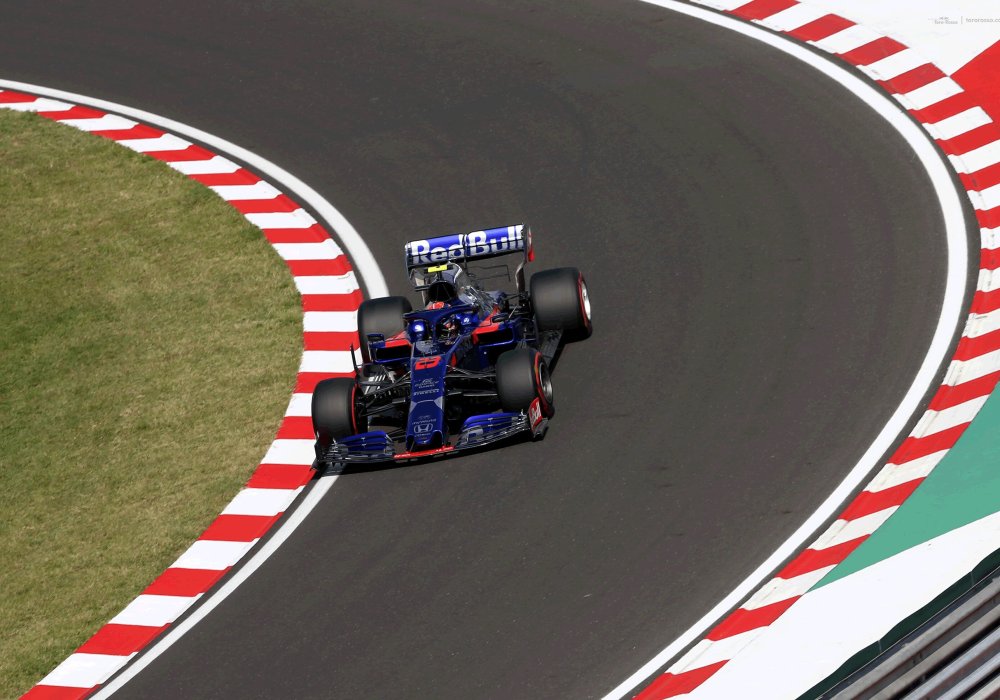


I’m Trying

In anything I’ve ever done, my mum has always told me to try my best. Try.

I’m trying to stand on my own two feet.

I’m trying to chase my dreams. I’m trying to pay bills while I chase dreams. I’m trying to juggle two jobs. I’m trying to turn that passion into a living.

I’m trying to be myself when people told me that that wasn’t good enough, when I was picked apart for being myself. I’m trying to be my own man.

I’m trying to understand and learn more about myself. I’m trying to live with myself and my dyspraxia and how it affects me everyday.

I’m trying to deal with my insecurities. I’m trying be comfortable in own skin. I’m trying to brush off what others say about me. I’m trying not to care what others say about me.

I’m trying to be a better person. I’m trying to be someone that someone else will want to spend time with and that other people want to spend time with.

I’m trying to faithful to what I believe in. I’m trying to live to the values I believe in. I’m trying to be faithful to others while trying to be faithful to myself. I’m trying to have my actions and words line up. I’m trying to be real.

I’m trying to be there for others. I’m trying to be a better friend. I’m trying to be a better brother, a better son, a better grandson and I want to be a good uncle to my beloved nephew.

I’m trying to deal with loss. I’m trying to deal with rejection. I’m trying to deal with loneliness. I’m trying to find a balance between wanting my own space to be alone and wanting to be with people, which comes and goes like a flick of a switch. I’m trying to find a never-pleasing balance between accepting help and wanting to deal with things myself.

I’m trying to tell myself I’m young when I feel so much older than I am. I’m trying not to be undone by weariness.

I’m trying to deal with my mental health. I’m trying, as I’ve done for years, to deal with depression. I’m trying to be happy.

I’m trying. I’m trying my best.

I plough on as I always have, as I always will. I always pull through and I have pulled through much worse. Do not be concerned, for I write this so maybe others may feel empowered knowing they are not alone, that maybe someone feels just like they do. That they have permission to feel the same and not run away from the truth but face it and fight. To say, in this moment, there is hope and there are better days ahead. To help shine a spotlight on mental health, and not just when someone famous commits suicide.

Graham

Is Sebastian Vettel’s legacy being altered amidst title fights with Lewis Hamilton?

Image: Manuel Goria/Sutton Images via F1.com

Sunday afternoon provided another exciting Grand Prix in 2018, as a tight affair between Lewis Hamilton and Kimi Raikkonen was ultimately decided by tyre wear and Mercedes’ great tactics — positioning the yet-to-stop Valterri Bottas in front of Raikkonen to draw Hamilton close — with Hamilton emerging as the victor and extended his championship lead to 30 points over Sebastian Vettel.

For Hamilton’s title rival, Vettel, his P4 required a recovery drive after a spin on lap 1 following contact with Lewis Hamilton heading into the second chicane sent him to the back of the grid.

The stewards ultimately deemed this a racing incident, but really this is Vettel’s fault and he rightly bore the brunt of the outcome as he spun around. Hamilton left him more than enough room and Vettel should’ve gotten out of it — I just think Vettel didn’t want to accept that Hamilton had just brilliantly done him around the outside and expected Hamilton to just get out of the way? Like that was going to happen…

Whether Vettel had the pace to win in Monza, whether his presence up front may have actually helped Ferrari win the race we’ll never know, but what do we do know is that it was another crucial swing in the championship as Hamilton extended his lead to 30 points over his German rival.

Vettel and Hamilton have shared the grid since 2007 and have both enjoyed driving title-winning cars, but only in 2017 did the two finally share a title-contending car at the same time and lock horns together as the two title favourites (2010 doesn’t really count, that was a Vettel-Webber-Alonso title showdown. Hamilton was just on the fringes come showdown). In these two years where Formula 1’s selling point has been ‘Hamilton vs. Vettel’, what has become abundantly clear is the consistency of Hamilton across an entire season compared to Vettel, who has faltered under the pressure with the Italian Grand Prix proving to be another blot for the German’s copybook in his quest to become the first Ferrari champion since 2007.

With this latest knock in the German’s title challenge, the question that should be arising about now: is Vettel’s legacy going to be altered as a result of the outcomes of his two title battles against Lewis Hamilton?

Let’s go over it so far…

Vettel has enjoyed a glittering career in which he has won four titles and amassed over 50 grand prix victories.

He quickly rose from the ranks of Toro Rosso to replace the retiring David Coulthard at Red Bull in 2009 and continued his rise as one of Formula 1’s hottest new properties as he secured the first win for Red Bull in China.

In 2010 he went all the way as he won the title at the final Grand Prix in Abu Dhabi, pipping Fernando Alonso and teammate Mark Webber to the throne and claim the honour of youngest World Champion.

As Vettel made history, Red Bull had quickly developed a car that was the class of the field. By the end of 2009, it was the quickest car on the grid as Red Bull won the final three races of 2009.

In 2010, Ferrari and McLaren arrived with much improved cars from their 2009 counterparts — enabling Alonso, Hamilton and Jenson Button to win races — but the superiority eventually swung back to Red Bull, who won 9 of the 19 races in 2010.

By Abu Dhabi, the McLaren’s of Hamilton and Button had no chance of winning the title (Hamilton technically could have but it was never going to happen) and Alonso was sucking absolutely everything that Ferrari had to offer — it was clearly the worse car between itself and the Red Bull.

In 2011, Red Bull pressed their advantage right from the off as the Austrian outfit clearly had the best package right from the get-go as Vettel tore away to win five of the first six races. The respective packages from McLaren and Ferrari wasn’t up to snuff over the course of the season to contend with the Red Bulls, leaving Hamilton, Button and Alonso with no chance of contending for the title. The sister Red Bull in the hands of Mark Webber fared no better than Alonso, Button or Hamilton. By his own admission in his book, after his best title opportunity in 2010 slipped away, Webber admitted the “stuffing was knocked out of him”. He had prepared to retire after he had won the title but it didn’t happen, and Webber was on the decline in his career — no match for Vettel. In the end, it was a very easy title for Vettel to claim — which he did by round 15 of 19 in Japan — in what was easily the best car on the grid.

In 2012, again, the Red Bull proved to be the best car on the grid with Alonso, incredibly, willing his Ferrari to a title challenge despite winning just three races and winning none of them from Round 10 onwards — the infamous 2010 German Grand Prix where Ferrari enforced team orders, forcing Felipe Massa to move aside for Alonso. It took until the final round again but Vettel ultimately prevailed as he always should have given his machinery — his third world title coming a lot closer than it really should have.

And for the last of Vettel’s current four titles, 2013 was an absolute landslide as he won 12 races, including the last nine in a row, to win by 157 points over Alonso in second — the Red Bull as dominant as it’s ever been in the final year of the V8 era.

At the point of 2013, Vettel has had the dream career powered by a great car which had been the class of the field every year since the end of 2009.

Of course, Vettel’s unrelenting pace, in addition to a dream car, was unquestionable. His place as one of Formula 1’s finest drivers ever was, arguably, secured at the end of 2013 as he scured his fourth title in a row.

Anything that came after only cemented it…or did it?

Since 2014 began, Vettel hasn’t had everything his way. He went winless in 2014 as his teammate Daniel Ricciardo won three races before moving to Ferrari for the 2015 season, replacing Alonso. In his first two years with the Scuderia, Vettel didn’t have a title-winning car underneath him as Mercedes continued their domination in the V6 era.

In 2017, things changed.

After a regulation reshuffle, Ferrari finally produced a car in which the accomplished Vettel could finally mount a challenge to Lewis Hamilton’s and Mercedes’ throne, and so Vettel was thrust into the title fight.

When you’re in a title challenge, the microscope is incredibly fine. If there’s a fault in you it will be found out, especially when your opponent is Lewis Hamilton and Mercedes.

The 2017 Ferrari was equally as capable of winning the 2017 driver’s title as the Mercedes but its challenge was let down by two things. One was the Ferrari’s reliability, which gave up the ghost in Japan (forcing Vettel to retire in the early stages) and Malaysia, where Vettel was also forced to start from the back of the grid after an engine issue.

The second reason why Vettel’s title quest came up short was that Vettel cracked in key moments whereas Hamilton did not.

At Round No. 8 in Baku, Vettel saw red as he intentionally drove alongside and then into the side of Hamilton’s Mercedes after Vettel adjudged the Brit to brake-check him under the safety car, leading to some damage to Vettel’s front wing.

Vettel was handed a 10 second stop-go penalty for his actions, which ultimately cost him victory after Hamilton was forced to pit after his head-rest became loose, requiring a replacement. Vettel ultimately finished fourth ahead of Hamilton in fifth but needlessly threw away the victory, and 13 points were lost that day on account on his own recklessness…

Arguably the pinnacle moment of the entire 2017 season (certainly an iconic one) ,and the moment that the championship tide turned for good, came that Singapore.

Having stuck his Ferrari on pole, Vettel’s getaway off the line in the wet was slow, with both Max Verstappen and Raikkonen both enjoying much better starts. Raikkonen hugged the wall as he went to attack Verstappen while Vettel — with all the track to his right available to him — veered to the left to cover off his threats and pinched Verstappen in between the two Ferraris, which ended up in a massive crash and all three were forced to retire, but not before Vettel had a second off as he lost the back-end and made contact with the wall.

The stewards decided that this was a racing incident but, really, Verstappen isn’t making contact with Raikkonen until Vettel comes over, which left Verstappen between a rock and a hard place. But the ultimate backshot was that Hamilton ended up winning the race — at a track Mercedes were genuinely struggling and Ferrari thriving — and extended his championship lead from 3 points to 28 points.

It marked the beginning of the end of Vettel’s title challenge…

After the reliability issues of Malaysia and Japan, Hamilton beat Vettel to victory in USA and had the chance to clinch the title at the next round in Mexico.

Having qualified on pole, Vettel faced pressure from Verstappen heading into Turn 1. Verstappen hangs his car around the outside through Turn 1 and is left very little room by Vettel. The two make tyre-to-tyre contact before Turn 2, before Verstappen claims the corner and makes slight contact with Vettel’s wing as they head into Turn 3. Meanwhile, Hamilton switches back on Vettel heading into Turn 2 and gets himself ahead of his rival. Vettel then makes contact with Hamilton’s rear tyre, damaging his own wing and giving Hamilton a puncture. After being forced to pit, both cars fought through the field in recovery drives but it wasn’t enough for Vettel to deny Hamilton his fourth world title.

In the race that would decide the title, Vettel not only lost a position off the line, squeezed another car off of the track limits, he has also made contact with his main championship rival in an incident that probably could’ve been avoided. Some believe that Vettel knew exactly what he was doing when he made contact with Hamilton…

If it was intentional, it didn’t pay off as Hamilton secured his fourth world title and Vettel is left to reflect on what could’ve been…

Ultimately, Vettel had the machinery to beat Hamilton in 2017. Yes reliability played its part in Malaysia and Japan but the Ferrari had the potential to win the title on pace — those cars were incredibly close, with perhaps a slight edge going toward Mercedes ultimately in terms of performance but it was marginal.

But in the end, over the course of the 20-race season, Vettel made more mistakes than Hamilton. Hamilton — who is used to facing incredible pressure in intense title fights with Fernando Alonso, Kimi Raikkonen, Felipe Massa and Nico Rosberg in particular — didn’t falter under the pressure, didn’t make mistakes as Vettel did and remained calm while Vettel made mistakes and lost his cool in Baku.

When the big moments came, Hamilton seized them and Vettel faltered.

While 2017 was a missed opportunity for Vettel and Ferrari, 2018 held a lot of promise, with Ferrari building on their 2017 resurgence.

Though Ferrari won the first two races, the general feeling was that Mercedes still held the quicker car but this advantage wouldn’t last for long as Ferrari made significant engine gains. The general feeling by Canada was that Ferrari now had the quicker car.

Heading into the French Grand Prix, Vettel led the championship by a single point after his win in Canada. The weekend not only represented F1’s first return to France in 10 years but the first major moment in terms of the championship.

Heading into Turn 1, Vettel — having qualified behind both Mercedes — locks up and makes contact with Valterri Bottas, resulting in a puncture for Bottas (as well as damage to the rear of the car and leaving him in last place for good measure) and a new wing required for Vettel. Hamilton would go on to secure an easy win, uncontested from his teammate and his title rival Vettel (who finished in 5th), and take the lead of the championship by 14 points.

A pretty major, unforced error from Vettel who received a five second penalty for the accident, ruined the race of Valterri Bottas and ruined his own race single-handedly, while handing the championship lead to Hamilton.

Vettel was handed a reprieve for his error in France as Hamilton suffered a mechanical fault in Austria while Vettel finished third, allowing Vettel to re-take the championship lead before extending it further to eight points in Britain after a brilliant victory at Silverstone.

The most pivotal moment of the season (at least as of right now) came in Germany…

Having absolutely smashed his way to pole position at his home grand prix (with a huge opportunity to extend his lead after a failure for Hamilton is qualifying meant he started from P14), Vettel comfortably led the first part of the race before making his pitstop on lap 26. Having got the jump on his teammate having stopped earlier, Kimi Raikkonen was ordered to move aside for Vettel as the rain loomed in the air. On Lap 44 the rain arrived and then on Lap 52, arguably the most important moment of the whole season arrived.

Leading the race, Vettel lost control as he made his way through the beginning of the stadium section and helplessly skidded into the gravel, into the barrier and out of the race, with German admitting afterwards he was on the brakes too late.

Vettel sounded extremely upset over team radio and sounded like a man who knew he had made a catastrophic error… An error that has probably cost him the world title…

It was the same conditions for everyone out there (though, perhaps a tad different for Pierre Gasly, who Toro Rosso incredibly sent out on full wets for a period) but ultimately it was only Vettel who fell victim to the conditions and retired as a result.

Meanwhile Hamilton (though in controversial circumstances after a shady excursion between the pitlane and the track) recovered to win the race and retake the championship lead by 17 points.

Even if Hamilton had finished 2nd behind Vettel in 1st, Vettel would’ve extended his lead to 15 points. Instead, it’s a DNF and Hamilton claims victory — a 32 point swing in favour of Hamilton. Instead of Vettel picking up the full 25 points and extending his lead into double figures, it’s Hamilton who takes the double-digit lead.

When the rain came again in Hungary on Saturday, it was Mercedes who triumphed over Ferrari, leaving Hamilton on pole on a track where track position is everything. With Vettel out-of-place in fourth, he did well to salvage second on race-day, but was powerless to prevent Hamilton from winning — as the German struggled behind the sister Merc of Bottas after a poor pitstop from Ferrari left him behind the Finn — and powerless to prevent Hamilton extending the championship lead to 24 points heading into the summer break.

With it all to do after the summer break, Vettel was able to strike-back in a statement win at Spa as Ferrari left Hamilton and Mercedes trailing in their dust, reducing the Hamilton’s gap to 17 points.

But just when momentum seemed to be with Vettel again, it slipped away.

Already disgruntled over how qualifying went at the Italian Grand Prix, Vettel — starting P2, ahead of Hamilton — was unable to get a move done on teammate Raikkonen heading into Turn 1. On the run down to the second chicane, Vettel is off the racing line on the left-hand side of the track as he tries to find a way by Raikkonen. Under braking, an opportunity opens for Hamilton around the outside. Hamilton’s overtake is delivered to perfection, clean around the outside whilst leaving Vettel fair space. But Vettel didn’t apply enough steering lock heading out of the corner, didn’t leave enough space for the second part of the chicane and makes contact with the Mercedes, spinning Vettel around and damaging part of his car.

The stewards, again, decided that this was a racing incident but, really, Vettel is to blame here. Hamilton left enough space and the move was done — that was Hamilton’s corner. Vettel could’ve avoided this incident if he had gotten out of it and applied more sterring lock instead of allowing his car to open up into Hamilton. Again, if Vettel expected Hamilton to get out of that move, he should’ve known better — he could’ve avoided this accident.

Hamilton would go on to win the race while Vettel finished fourth, the Brit extending his championship lead to what could be an insurmountable 30 points.

The error marks the third major error Vettel has made this season that has cost him significant points — France, Germany and now Italy. Against Lewis Hamilton and Mercedes, such errors are punished and Hamilton has taken victory in each race Vettel has faltered in 2018.

Vettel isn’t out of this title race yet but it’s going to be extremely difficult to come back from here. Hamilton has, again, proven unshakable this season, and Vettel is going to have to hope Hamilton makes a mistake (which is very rare), or hope Mercedes’ bulletproof reliability is tested later in the year.

Again, in the key moments of the season, it’s Vettel who has made the mistakes and not Hamilton.

So, I come back to the question of which this piece is named after… Is Sebastian Vettel’s legacy being altered amidst his title fights with Lewis Hamilton?

Yes is the answer.

During his first four titles with Red Bull, and his battles squaring off against Fernando Alonso, Vettel clearly had the best car each and every time, he won the title. And that’s where things are different here. His car has been as good (2017) if not better (2018) than Hamilton’s.

In two title fights with equal cars this time around, there will be something said for Vettel’s inability to beat Hamilton over a season — that it was Vettel who made more mistakes over this two-year period than his title rival.

A huge knock some had on Vettel’s first four titles was ‘He had the best car, the best car by far’. There was no way to know for sure but what is for sure is that when Vettel has had more-or-less equal equipment than his title rival, he has fallen short.

Reliability issues near the end of 2017 were a factor for Vettel and Ferrari in their title quest but when people talk about 2017’s title and the key moments, Singapore and Baku (i.e. Vettel’s main errors) are the main talking points over the reliability issues in Malaysia or Japan. Japan was the exclamation point after the damage that Vettel had done in Singapore.

In 2018 so far, it’s actually been Hamilton who has been the recipient of reliability issues over Vettel, and Ferrari (marginally) have had the better car this year so far too. And yet, Hamilton is 30 points ahead…

It’s been Vettel’s errors/mistakes that have left him with everything to do with seven races to go and Hamilton’s consistency that has him in the ascendancy in the race for a fifth world title.

In two title battles with effectively equal cars, mistakes are going to define who wins the title and who doesn’t, and, consistently, it’s been Vettel who has slipped up and not Hamilton. It’s been Hamilton who has proven to be the more complete and consistent driver, not Vettel.

Hamilton and Vettel are two of the best drivers of their generation — entering Formula 1 at about the same time. Their careers will eventually end and they will draw comparisons for the rest of time, as two of the greatest drivers of their time. They’ve both enjoyed the best car in Formula 1 on their way to world championships — dominant cars at that — have taken many pole positions, many podiums, many wins and many world championships.

But, ultimately, in this two-year stretch where they’ve shared title winning cars and squared off for the world championship, it’s been Hamilton who has emerged on top and Vettel the one folding under pressure, Hamilton proving to be the model of consistency while Vettel continues to make mistakes.

And that is why Vettel’s legacy will be affected, unless he find away to overturn a 30 point deficit in the remaining seven races…

Ricciardo to Renault and a 2019 lineup prediction

Image: Manuel Goria/Sutton Images via F1.com

We all knew the silly season was coming, but come on…

In what was expected to be a quiet week — with the F1 summer break upon us and the mid-season testing just finished with — Daniel Ricciardo and Renault blew everyone away on Friday afternoon when the rumours broke that the Red Bull driver had signed a contract with Renault for 2019 before the news was confirmed first by Red Bull (that he wouldn’t be with the team in 2019) and then by Renault who were obviously delighted to announce the deal.

This comes as a surprise for many reasons but mostly because, with Mercedes and Ferrari looking beyond Ricciardo for 2019, everything pointed to Danny Ric re-signing with the only F1 team he has considered home (I think that’s fair to say) — it really was a matter of ‘when’ not ‘if’.

Heck, even Ricciardo himself gave a pretty strong indication that he would re-signing with Red Bull, telling reporters in Hungary that his extension with Red Bull “…will definitely be done by Spa,” and that “It’s just a little bit of fine tuning here and there…it’s all good.”

A pretty strong indication, you’d have to say.,,

It’s unclear right now (writing this the day the news dropped) what has caused this 180 turn but I have a few theories…

Firstly, I don’t think Red Bull’s decision to switch to Honda engines from 2019 onwards played that much of a role. Since Canada, where they brought a significant upgrade, that Honda engine has shown some solid competitiveness — how much worse, if at all, is it to Renaut’s engine now in terms of both pace and reliability? A lot more Red Bull-Renault engines seemed to have given up the ghost more than Toro Rosso-Hondas this season…

I do think finance has played a big part here. Being a works team, it’s no secret that Renault have a bit more disposable income at their discretion than a team like, say, Williams or Force India. I also think it’s no secret that Ricciardo is underpaid across the board, not only for what he delivers on track but off of it too — an extremely marketable (and fantastic) personality with the team itself and sponsors. We don’t know what the figures from the respective Red Bull and Renault offers were, but you’d have to imagine that the Renault offer was significantly more handsome than what Red Bull might have offered — who, it’s well documented and mentioned by team principal Christian Horner, already pay a handsome amount to Max Verstappen…

Speaking of Max Verstappen, I’m sure he played a part in this decision too. Not so much to do with Max himself (they seem to get on pretty well) but everything surrounding him — the hype, the attention (media and fans alike), Max’s growing position in the team (you can definitely sense small elements of Vettel-Webber) and possibly his salary compared to Danny Ric for all we know.

The reasons I’m sure will become a bit more clear when Ricciardo and the F1 circus arrives at Spa near the end of August but the fact of the matter is the Aussie will be donning yellow next season, leaving the team that have nurtured his 7-year Formula 1 career that started in the HRT at Silverstone in 2011…

I think it’s an extremely bold move to Ricciardo to make when he had a very safe option in Red Bull on the table. For sure, Renault have made gains in each season since their return to F1 in 2016 but they still have a long way to go if they want to be challenging Red Bull, Mercedes and Ferrari, and I don’t expect them to be challenging Red Bull next season either unless Renault make significant steps forward with their car and engine and Red Bull fall backwards with Honda power.

But there comes a time where every man has to make a change in his life, the bird must leave the nest at some stage in its life, and Ricciardo I think will do well with a new change of scenery — I’m just worried he’ll be fighting for P6’s, P7’s, P8’s next year instead of top 5 finishes, including race victories.

With this mega announcement, Renault have confirmed their driver lineup next year as Ricciardo joins Nico Hulkenburg, paving the way for what could be a lot of change down the paddock. The silly season had begun anyways but now it’s been ignited with jet propulsion.

And, really, it depends greatly on what Red Bull decide to do with their now vacant seat for 2019. A year ago, if this situation where Daniel Ricciardo leaves Red Bull had arisen, Carlos Sainz would’ve been the no-brainer to be his replacement. But it’s not that simple anymore.

Not only has Sainz, who has been in reported contract talks with McLaren, endured a difficult season at Renault (by his own standards) and has been outdriven by teammate Nico Hulkenburg, who many expected to trail the highly rated Spaniard, but the emergence of Toro Rosso starlet Pierre Gasly — who has performed brilliantly in his Toro Rosso this season, guiding his Honda-powered car to P4 in Bahrain and more recently P6 at Hungary — has thrown a spanner in the works when it comes to Sainz and Red Bull.

But more than that, according to RaceFans.net (article linked above), Red Bull’s advisor and head of young driver programme, Helmut Marko, is reportedly against the idea of reuniting former Toro Rosso teammates Max Verstappen and Sainz again at Red Bull. With Red Bull already nailing their colours to the mast that is Max Verstappen, that would be a problem for Carlos Sainz and Red Bull, so it would seem unlikely based on that and performance this season compared to Gasly (which may or may not be a factor), that Sainz will reunite with Verstappen…

Sainz has been discussing a possible deal with McLaren, who rate Sainz highly.

“We think Carlos is an excellent racecar driver,” McLaren chief Zak Brown said. “Of course Carlos is potentially on the market, I don’t know his exact situation at Renault and Red Bull but he’s certainly someone as you go down the shortlist of drivers that you’d consider putting in your car.

“If he was free, and if we had a seat, he would certainly be high up the list for a racing seat.”

If it ends up that it’s not Ricciardo for Sainz in a like-for-like swap, it blows the driver market wide open.

Firstly, it opens up the Red Bull seat to, more than likely as discussed, Pierre Gasly. I’d love to see Fernando Alonso in that Red Bull seat but that seems unlikely given how Red Bull normally promote from within — usually from their young driver programme — and possibly Alonso’s relationship with Honda (given how he often threw Honda under the bus during their three-years together) could also play a part.

If Gasly is promoted, that opens up a spot at Toro Rosso and there could be two spots open should they decide not to bring back Brendon Hartley. I still think, if Alonso stays and Sainz joins his fellow Spaniard at Woking, McLaren and Toro Rosso could come into an agreement to send Lando Norris to Toro Rosso for a season/until Fernando Alonso calls time on his stellar Formula 1 career — especially if Norris wins F2, with F2 rules preventing champions from returning to the series. It’s beneficial for everyone: Toro Rosso get a quality driver for a year or two and McLaren have their man in an F1 seat (though the complications there are obvious, it’s just a theory of mine) And after that, I think Toro Rosso are better off sticking with Hartley over test driver Sean Galael… And as for the Red Bull junior driver programme, I think they’re a year or two from promoting another one to Toro Rosso.

At McLaren, there could easily be two spots going there too if the team elect not bring Stoffel Vandoorne back and Fernando Alonso either moves on to another F1 team or retires from F1. Vandoorne has had a terrible season compared to Alonso and he’s definitely under pressure for his F1 future. If Alonso retired, his McLaren career might be safe, depending on what McLaren choose to do with junior driver — and current F2 championship leader — Lando Norris and if they sign Carlos Sainz in the process.

With the Renault lineup confirmed, the Esteban Ocon-Renault rumours disappear immediately, leaving Ocon likely to spend another season with Force India. The other seat at Force India is up for debate, with Sergio Perez rumoured to be heading to Haas and who knows what else will go down there with the recent administration. And where Lance Stroll/Lawrence Stroll potentially figure into things remains to be seen in the midst of the administration/potential new ownership process.

I think it’s at this point in the driver market where the Ricciardo-Renault news begins to have less of an effect when it comes to drives. The likes of Ferrari, Mercedes Williams, Haas and Sauber…

With regards Perez, he’s rumoured for a seat at Haas, who don’t have anything lined up for 2019, though it’s safe to assume Kevin Magnussen has done enough to secure a seat. I personally believe Charles Leclerc would be best suited for that Haas spot rather than a promotion straight to the best seat F1 might have to offer if Ferrari move on from Kimi Raikkonen. Romain Grosjean is certainly still quick enough to be in F1 but his consistency has been left wanting this season — involved in a number of accidents/incidents this season.

Perez has also been rumoured to return to the team that gave him his first seat in 2011: Sauber. I’d be surprised if it happened but upon thinking about further, you can talk yourself into it. I certainly don’t expect rising star Charles Leclerc to remain with the Swiss outfit and I think time will finally expire on Marcus Ericcson’s Formula 1 career now that Sauber are in the points hunt again. With that said, and with Leclerc surely moving on, I expect another Ferrari junior driver Antonio Giovinazzi to take his place. That 2nd spot next to Giovinazzi could end up being the lifeline of drivers such as maybe Stoffel Vandoorne, Romain Grosjean or even Kimi Raikkonen, whose name has been mentioned with Sauber…

At Williams, I’d imagine Sergey Sirotkin will remain but Lance Stroll’s spot is a bit more questionable with this Force India link. Force India, obviously, need the cash and Stroll offers that. If Stroll moves on, I’d expect Mercedes to use their connection with Williams to try push junior driver George Russell into an F1 seat at Grove. Junior driver Olly Rowland would be a good shout for the second drive as is test driver Robert Kubica.

For Mercedes, Lewis Hamilton and Valterri Bottas were signed to deals at Hockenheim, so nothing doing there.

And, lastly, at Ferrari, Sebastian Vettel is secured for another season whereas Kimi Raikkonen’s seat is not guaranteed. Raikkonen has had a strong 2018 (certainly better than his 2017 season) and I think has done enough to earn one more season with the Scuderia. Charles Leclerc is the obvious replacement — and he will be one day — but I think it’s a year or two too soon for him. There’s a lot of pressures and expectations that comes with a Ferrari drive and I think the experience at Haas for a year or two would help round him out, improve as a driver and help iron out some of those little errors he makes at times that may not mean much in a Sauber but mean everything in a Ferrari — the difference between pole position and the second row. Plus, it’s not in Ferrari’s nature to promote young drivers to their seats, especially ones heading into just their second season — they just don’t do it. So for those reasons, I’d be very surprised if Ferrari actually went through with it — it would be incredibly un-Ferrari.

So, with all of that said, I’m going to (horribly) predict the F1 2019 grid.

Mercedes: Lewis Hamilton & Valterri Bottas

Ferrari: Sebastian Vettel & Kimi Raikkonen

Red Bull: Max Verstappen & Pierre Gasly

Renault: Daniel Ricciardo & Nico Hulkenburg

McLaren: Fernando Alonso & Carlos Sainz

Haas: Charles LeClerc & Kevin Magnussen

Force India: Esteban Ocon & Lance Stroll

Toro Rosso: Lando Norris & Brendan Hartley

Sauber: Sergio Perez & Antonio Giovinazzi

Williams: Sergey Sirotkin & Robert Kubica

Should be fun to see how wrong I am, but hey…always fun.

The Dončić Dossier Vol. 24 — vs. Fenerbahce Dogus

Image: EuroLeague.net

After smashing Barcelona last time out, Real Madrid lost a close encounter with defending champions Fenerbahce in Madrid on March 2nd.

For top NBA draft prospect Luka Doncic, it was a bounce back game after a tough outing against Barcelona: 14 points on 5-of-9 shooting, 1-of-4 from three, 3-of-4 from the free throw line, one rebound, four assists, one steal, three turnovers and a PIR of 17 in 28 minutes coming off of the bench.

Let’s go through it…

Offense

14 points for Doncic, let’s go through how he got to those 14 points.

It began with Doncic drawing free throws after getting bumped on the drive:

Not a great foul to give away…

Off of the Fenerbahce turnover, Doncic streaks ahead off-ball and is found by Gustavo Ayon and Doncic does the rest:

What I really liked on this play was that Doncic used the rim to shield the ball from any potential shot blocker. If he had used the other side of the rim, the block would’ve been more realistic if the defender was chasing.

For his only three-pointer of the game, Doncic bides his time before simply takes a dribble to his left and rises into a contested three:

Next, Doncic comes off of the Edy Taveres and gets to the free throw line area where he bumps into the defender behind him before rising into an easy jumper in the paint:

Doncic turned defense into offense as he comes up with a steal, heads down the court and almost (kind of) cradles the ball as he goes by the defender to protect the ball and lays it in:

In one of his best moments in this game, Doncic manages to squeeze between two defenders on the drive and gets to the rim for the score:

Next, Doncic comes off of a Gustavo Ayon screen, gets inside the paint and somehow — again — manages to squeeze himself inside and draws the foul and free throws:

One of the things I didn’t like from Doncic in this game was some of his three-point shot selections.

This first one isn’t too bad, to be fair. Late clock situation and Doncic is basically asked to bail out Madrid after a very poor offensive set but can’t connect on the three:

This next three I’d like to see some offense run before this shot goes up — Doncic ‘dribble-dribble’, tries to create some space against Gigi Datome but the three he launches is contested and misses:

Elsewhere, Doncic’s only turnover of the game occurred in the first quarter as he drives on the switch, drives into the help defender, falls over and loses the ball:

Passing/playmaking

Four assists for Doncic in this game and, as always, there chances created but Doncic was a bit less smooth this game, making a number of blunders/errors.

Things didn’t start well as Doncic checks into the game trailing 12-2 and his first contribution is a turnover as he tries to link with Edy Tavares in a pick-and-roll:

Not long after that, Doncic tried to hook up with Felipe Reyes and commits another turnover as the ball just sails by the hands of Reyes:

In transition, Doncic lifts his pass to Fabien Causeur a little too high for Causeur to handle and it results in a Madrid turnover:

Doncic did eventually get into a groove and set up a number of three-point opportunities.

Heading down the court, Doncic draws the defense as the ball-handler and finds Jeffrey Taylor for a three-point attempt but Taylor is unable to hit:

Another simple play/pass followed as Doncic waits for Rudy Fernandez to come off of the screen for a catch-and-shoot three but Rudy can’t connect:

Heading down the floor again, Doncic spots that Fenerbahce haven’t set up as well as they should and Doncic finds the open Rudy Fernandez in the corner for a three:

A lot later, Doncic picks up the ball following a turnover and finds Anthony Randolph with an outlet pass for the assist:

Defense

Not a lot to note here today but what there is to note is pretty good.

Here, Doncic does well to get around the screen to contest the three-pointer but cannot prevent it from going in:

We’ve seen this one already, but Doncic finds himself in position to grab the steal and he heads down the other end for the score:

Finally, Doncic plays some really tight defense on Jan Vesely in the corner and contests the shot, which results in an airball as the shotclock expires:

I lover good vertical defense and this was textbook from Doncic to force a tough shot for a very good player in the EuroLeague in Vesely.

In closing vs Fenerbahce…

An interesting game for Luka Doncic…

Definitely a more offensive game for Doncic than anything else, which is fine since his shooting was efficient overall in this game. In fact, the only shots Doncic missed were three-point attempts — always a good thing.

From a facilitation point of view, Doncic had a rough going of things initially but did eventually get going but his teammates couldn’t always connect on their finds from Doncic.

Defensively, again, nothing huge to note but Doncic has definitely improved on the defensive end throughout the season and this game was a great example of that with a lack of defenive foibles/errors throughout the course of his 28 minutes of action.

The Dončić Dossier Vol 23 — @ Barcelona Lassa

Image: EuroLeague.net

Real Madrid got back winning ways after they absolutely smashed rivals Barcelona in their own house 101-74 on February 23rd.

For top NBA prospect Luka Doncic, it was a strange night. Doncic came off the bench sporting a sleeve on his left arm and only played 15 minutes, scoring 2 points, shooting 1-of-7 from the field, 0-of-4 from three, six assists, four rebounds, one turnover and a PIR of just 3.

This won’t be too long but still things to go over as always…

(Apologies for the lacking video quality this week, just how things went…)

Offense

A difficult night for Doncic offensively and, again, the three-point shooting wasn’t there.

In the second quarter, Doncic puts on a dribble clinic, eventually steps back and rises into a three but misses:

Very shortly after that, Doncic works himself into the corner with the dribble, floats behind the three-pointer, rises but, again, misses the three-pointer:

Doncic made sure he made up for lost time coming off of the bench and he launched another three-pointer a few minutes after that last one, this time coming in a late clock situation as some good Barcelona defense makes this attempt a tough one for Doncic:

Very good Barcelona defense, actually…

On the wing, Doncic again settles for an outside/bad shot with 15 seconds left on the shotclock:

Doncic struggled to get anything going inside the three-point line.

Here, Doncic weaves his way to the free throw line, rises into a jumper but can’t get the shot to fall:

Even the one shot Doncic made came off of his own miss, tipping in the rebound:

And to sum it up, Doncic drives inside with nowhere to go and ends up turning the ball over and committing the foul:

Passing/playmaking

Here’s where Doncic made his biggest impact of the game, with his apparent injury clearly affecting him offensively.

Here, Doncic feeds Reyes in the post with the deep bounce-pass, and Reyes takes care of the rest:

In transition, Doncic makes this nice outlet pass to Gustavo Ayon (making his long-awaited return) but Ayon is rejected at the rim:

In the second quarter, a bit of a more flashy touch from Doncic as he delivers the flashy bounce-pass to Felipe Reyes in transition for the assist:

Reyes and Doncic hooked up on multiple occasions in this game and did so again in the third quarter as Doncic lifts this pass inside to Reyes who finishes the play with the turnaround J:

One of Doncic’s better plays came in the fourth quarter as he draws a crowd (three defenders) as he pushes in transition and finds Reyes on the move for the layup:

Of course, Reyes wasn’t the only teammate Doncic hooked up with for buckets as he finds Fabien Causeur on the drive and kick for the three-pointer in the weak-side corner:

And for the play of the game, in a ‘welcome back’ kind of moment for Gustavo Ayon, Doncic hooks up with Ayon for the ally-oop:

As soon as Ayon turned, Doncic lifted the oop skywards — great feel/vision for the game to make that play.

Defense

Only two things to talk about defensively…

Doncic played this defensive possession well as he shows good defensive activity from full court before committing a bad foul and being subsequently yanked afterwards:

Not a good way to give a team some free throws…

Doncic showed some better defensive play as he did a good job chasing around these screens, getting himself back into the defensive play:

Good defense from Ayon too on the show…

In closing @ Barcelona…

Not a ton to say here…just one of those games for Doncic.

He definitely seemed bothered by his injury but was still able to make things happen when it came to getting others involved with those six assists — Felipe Reyes being the big beneficiary in this game.

Just 15 minutes played, struggling from the field…yeah… There’s nothing to say here for this game.

The Dončić Dossier Vol. 22 — vs. Olympiacos

Image: EuroLeague.net

Real Madrid lost their second game in a row as they narrowly fell to Olympiacos 80-79 in Madrid on February 9th.

For top NBA prospect Luka Doncic, he enjoyed one of his best scoring games of the season as he went off for 27 points on 7-of-14 shooting from the field, 1-of-6 from three, 10-of-15 from the line, two rebounds, three assists, one steal, one turnover, one block and a PIR of 33 (!!) in 33 minutes of play in his first start since Round 11.

Offense

This is where we’re going to spend the majority of time today, so let’s go over how Doncic got to his 27 points and we’ll look at some of the negative stuff afterwards.

Doncic hit 7 of his 8 two-point attempts and here’s how he got himself on the board as he rejects the screen, gets inside, fades and hits the shot as he falls over:

Liked how Doncic was able to weave between/inside the defenders and the degree of difficulty in the finish is fairly high…

From the perimeter, Doncic again drives inside, fades and hits the shot:

Off of one leg too…

Again on the drive, Doncic decides to pull-up on this occasion and hits the mid-range J:

From the opposite side — similar to what we’ve seen already — Doncic again drives inside, pulls up just after the free throw line and hits the jumpshot:

Next, Doncic makes a great cut (selling the defender faking one way before going another), gets the ball and makes the layup and the foul:

Love the misdirection on this play by Doncic.

For his one three-pointer of the game, Doncic catches the ball after the drive and pass by Jeffrey Taylor, goes to right, steps back and hits the three:

In what was probably his best play of the game, Doncic unleashes a killer cross and the quick change of direction leads to a score at the score at the rim:

In transition, Doncic is leading the pack off-ball, then receives the ball and fakes at the rim to shed the defender for the easy score:

Doncic got to the free throw on 15 occasions in this game, we’ll look at a few instances of him getting to the line.

Doncic drew free throws when driving to the rim often, as he did here near the end of the first quarter:

On a switch this time as the 3rd quarter ticks to close, Doncic gets to the rim where he draws the foul and free throws:

One of my favourite fouls that Doncic drew came late in the fourth when he put a big on a switch on skates, dribble-drives past him and draws the foul:

Doncic drew at least six fouls in the fourth quarter alone — mostly on drives — and once in transition. He shot 10-of-15, and you’d like to see more than that made but Doncic was fairly tired in this game and most of his missed free throws were short.

Even though you’d like to see Doncic shoot maybe 12/13 out of 15, the fact he drew 15 free throws was still mightily impressive.

Alright, let’s move on to some of the not-so-good parts of Doncic’s offense this game…

You might have guessed but we have to talk three-point shooting.

Doncic shot 1-of-6 from three and a number of these attempt were not great.

In the first quarter, Doncic receives the ball, declines to take the immediate opportunity, takes a dribble and settles for a tough, contested three which misses:

Here, Doncic sizes up his defender on a switch and takes a step-back, contested three-pointer which misses:

There was one situation where a late shotclock situation forced Doncic’s hand somewhat but the shot taken is extremely difficult:

The three-point shooting is kind of a trip back to earlier in the season where Doncic settled often from behind the arc — about the only stain on Doncic’s offensive game.

That and, well, Doncic’s attempt to win the game for Madrid — just unable to break down the defense, falls over and has to pass it off and Madrid lose the game:

Passing/playmaking

Doncic was a bit more in ‘score-first’ mode (whether that was related to him finally starting again, I don’t know) but a few things to show nevertheless…

In one of the few pick-and-rolls Doncic ran this game, he squeezes a pass to Taylor on the weak-side corner for a made three-pointer:

In another pick-and-roll with Edy Tavares, Doncic finds another shooter in the form of Trey Thompkins for a three-pointer on the second attempt having tried to link up with Thompkins:

Doncic linked up with Thompkins again, drawing the defense on the little drive, opening an opportunity for Thonpkins who misses the three:

On the drive this time, Doncic does indeed get inside, turns, finds Fabien Causeur for a three-point attempt but, again, it’s missed:

Here, Doncic finds Thompkins inside the arc this time with a beautiful drop-pass (seeing the play develop in front of him) to the cutting Thompkins, who muscles his way to the rim and hits the layup plus the foul:

There were a few possessions where Doncic put his teammates into good positions but they declined to take the shot available — or stepped out-of-bounds as Jeffrey Taylor did here after Doncic found him in transition:

In transition, Facundo Campazzo leads the charge, finds Doncic who fakes a three, drives a bit and finds Campazzo in the corner who elects not to take the three-point shot, choosing to drive and drawing the foul:

Defense

The usual ‘some good things, some bad things’ for Doncic on the defensive end.

Let’s start with some of the mishaps…

Here, he’s beaten by the dribble and Edy has to rotate over to cut off the danger and has to commit the foul, leading to free throws:

On this possession, Doncic is caught ball-watching somewhat and rotates too late as the help defender as the offensive player gets to the rim before dumping it off to Doncic’s man for the score:

On the offensive rebound for Olympiacos, you’d like to see Doncic contest this shot:

Again, I am probably nitpicking somewhat but, hey, worth pointing out anyways… Now for the good/better stuff.

Doncic may not have contested that last clip well but he did a much better job contesting this three-point shot which missed:

Again, a good contest (this time from a standstill) from Doncic but the shot still goes in:

He had better luck a little later, forcing a miss after another good contest:

Here, Doncic showcases his ability and versatility to switch on the defensive end, doing so on multiple occasions before Felipe Reyes commits the foul:

Here, Doncic comes over as the help defender to challenge and disrupt this shot at the rim, forcing the miss:

More disruptive defense from Doncic as he shades over to disrupt the pass and forces the turnover:

And finally, some good baseline, on-ball defense to prevent the penetration and Doncic forces the pass:

In closing vs. Olympiacos…

A very good game from Luka Doncic.

More of a focused effort on his own scoring and less facilitation to his teammates than usual but with how efficient he was inside the three-point line, I don’t think you can complain.

You’d obviously like to see the three-point attempts reigned in a bit but this was the first game in a while where Doncic has settled to this degree from the outside, to be fair.

From the free throw line, you’d obviously like to see maybe 12/13 out of 15 rather than 10 but he did look quite tired while taking some and a number of them were short. Again, the fact he got to the line 15 times is impressive to begin with.

For the game itself, disappointing for Madrid that Doncic couldn’t make something happen to win the game but if Madrid and Doncic had made their free throws (17-of-27) it wouldn’t have had to come to that… But, alas…

Defensively, again, more good than bad — few mental lapses but nothing that really worries me at the next level.

(Writing this the day after Real Madrid actually won the EuroLeague title against Fenerbahce and a few days after Luka Doncic won EuroLeague MVP. Incredible stuff.)

The Dončić Dossier Vol. 21 — @ CSKA Moscow

Image: EuroLeague.net

After winning last time out against Efes, a major tilt between EuroLeague heavyweights Real Madrid and CSKA Moscow took place in Moscow on February 1st, with CSKA — behind a 33-11 first quarter — winning out in the end 93-87 as Madrid’s fourth quarter comeback ultimately fell short.

For top NBA draft prospect Luka Doncic, it was one of his strongest games since the early stages of the EuroLeague season as he scored 21 points on 7-of-15 shooting from the field, shot 2-of-5 from three, 5-of-9 from the line, five rebounds, five assists, three steals, four turnovers and a game-high PIR of 23 in 30 minutes off of the bench.

Offense

Obviously a strong outing in this department with those 21 points and Doncic scored his 21 points in a variety of ways, as you might expect.

After a slow start to the game, Doncic finally got on the board as he drives from the three-point line all the way to the rim for the basket:

I liked the very brief fake left before the drive going to his right, think it really helped make this play possible…

We’ll stick to Doncic going to the rim.

Coming off of the screen/flash at the top of the key (hard to tell, given the feed…), Doncic gets a good head of steam heading toward the rim before rising (as the defender continues to back-pedal) and displaying some lovely hang-time as he hits the one-handed runner off of the glass and home:

After Madrid come up with the block on the defensive end, Doncic grabs the ball and sets off in transition, using the euro-step to finish off the offensive move as he scores at the rim:

Beautiful euro-step to beat the defense…

In the fourth quarter, Doncic gets downhill after a screen and gets to rim where he unleashes some of that sneaky athleticism as he dunks the ball and draws the foul:

Though, Doncic would miss the free throw (missing four of them on the night, which is pretty rare for him), it provides a nice segue for free throws that Doncic drew whilst getting to the rim/on the drive.

Off of the dribble, Doncic drives inside, again displays some nice hang-time as he draws the foul at the rim from Will Clyburn, resulting in two free throws:

This clip is also a great example of Doncic struggling somewhat to get by with his pace (doesn’t have that elite burst/quickness) but he has a good frame and is able to fend off the challenge as he drives.

In transition again we see a bit of the flair that Doncic brings as he firstly grabs the rebound, goes behind his back with the ball, gets to the paint and draws the foul and free throws:

Speaking of other ways of scoring in the paint, Doncic operated in the post on a couple of occasions, managing to score on this possession as he backs down — single coverage — spins and beautiful footwork puts Doncic in a great position to score and he does so:

I love how Doncic positioned himself as he spun. Watch it again, and look at his left heel/foot, how it’s positioned when he spins and how it kind of helps seal off the on-ball defender.

However, it wasn’t all smooth sailing for Doncic at the rim/on the drive…

In the first quarter, Doncic waves off/rejects the screen from Edy Tavares, tries to get in on his own, is unable to do so and settles for a tough, contested jumpshot which misses:

In this next clip, Doncic is able to get inside this time after a Trey Thompkins screen but takes a difficult, contested shot (off-balance somewhat, unnaturally positioned) at the rim and misses:

After coming up with the steal from a loose dribble, Doncic heads the other way in transition. He gets to the free throw line area, rises, has the ball stripped/deflected on the way up and ends up being clattered into as he tries to recover the ball, leading to a sore landing and a turnover that leads to a CSKA basket:

Again off of the dribble, Doncic is able to get inside and a look at the rim but his floater is short on this occasion:

In the post, Doncic looks to pass out of the post but his pass is a little too long and it results in a turnover:

A bit of a more general play, but Doncic commits the very rare travel turnover in the third quarter:

Finishing off the offensive portion of this breakdown with the three-point shooting for a change as Doncic shot 2-of-5 from three.

Really, this is 2-of-4 from three, as one of those attempts was a half-court heave at the end of the first quarter — it obviously counts, but you know…

In the third quarter, Doncic gets inside, is unable to progress, passes out of the paint, receives the ball again, fakes the three to free up space and then hits the open three:

Later in the quarter, Doncic successfully connects on the catch-and-shoot three, set-up by Jaycee Carroll in transition:

As for his misses, this first one involved Doncic attempting to connect from deep but the shot is off-line:

And, finally, Doncic and Rudy Fernandez work a nice two-man game and it eventually ends with Doncic attempting a three-pointer which misses:

Passing/playmaking

Five assists for Doncic in this one, let’s go through some…

Even though Doncic had issues with his own offense in the first quarter, he was able to link up with Edy Tavares, as the CSKA shows an extra body to Doncic off of the pick-and-roll, leaving Edy more open than he normally would be. Doncic finds Edy with an overhead pass for the assist and the score for Edy at the rim:

We know Doncic is an unselfish player, and he continues to demonstrate that as he turns down a shot he could’ve taken himself to find Jeffrey Taylor, who makes the extra pass to Fabien Causeur for a three-pointer:

In the second quarter, Doncic finds the cutting Jonas Maciulis for another assist at the rim (hey, guess what CSKA Moscow allowed a lot of in this game):

That’s a really nice play and good awareness from Doncic to see the play develop and then execute the play.

One of Doncic’s more impressive plays of the night was this near full-court outlet pass to Anthony Randolph, who scores the quick-break:

Whoo-boy!

More link-up wit Edy, this time in the pick-and-roll the lob is set up and as Edy goes to catch he’s fouled, drawing free throws:

Doncic set up a number of three-point opportunities for his teammates, this one to Trey Thompkins coming late in the game as Doncic collapses the defense after a screen before finding Thompkins for three:

A very simple play, a pass to Rudy Fernandez in the corner for a three-pointer but Rudy is unable to connect:

Nice snap pass to the fair…

And, finally, Doncic probes in the second quarter before setting up Anthony Randolph in the corner for a the long two-point attempt but Randolph can’t convert:

Defense

Some pretty good defensive activity in this game from Doncic — definitely more good than bad.

Doncic came up with three steals in this game, and the zone defense of Real Madrid certainly helped with one of these.

Here, Doncic is on-hand to intercept the pass to the wing and comes up with the steal:

Sergio Rodriguez also attempting a no-look pass will also contribute in leading to a turnover…

In a wild sequence Doncic, again, is in the right place at the right time and is able to intercept this pass on the baseline and come up with another steal. He then tries to set up a lob for Anthony Randolph which goes horribly wrong, then tries to stick home the shot at the rim after the pass from Randolph and misses:

We saw this in an earlier clip, but Doncic is able to pick up the loose ball and set off the other way but ended up leading to a turnover:

Here, Doncic allows Othello Hunter to get in front of him but Doncic is able to break up the attempted lob to him, knocking the ball out of his hands and Madrid come up with the ball:

Here, Doncic uses his length to contest the three-pointer which is off-line:

Some more good defensive activity from Doncic as works to get back in front of his man after the screen and using his length to contest and finish the defensive play as the shot misses:

Moving onto some of the defensive foibles from Doncic in this game…we’ll start by blending both good and bad.

Here, Doncic displays some decent defensive activity to stay in front of his man, then switches onto the big underneath the basket but doesn’t complete the defensive play — you’d like to see Doncic contest that shot:

Doncic gets a taste of his own medicine in the post as he’s undone by a spin move by Othello Hunter, which leads to a basket and a foul as Doncic fouls on the way:

And finally, Doncic strayed a little too far from his man and was a little late to close-out and contest this three-point attempt by Nikita Kurbanov, who hits the three in the corner:

Possibly a by-product of the Madrid zone defense…

In closing @ CSKA…

Obviously a strong game for Doncic. He was inserted into the game when Madrid were already up against it (down 15-5 which became 17-5 within the first few seconds he was on the court). This has happened once or twice already this season (Madrid chasing a game in the first quarter before bringing in Doncic), and going forward, Doncic would be inserted into the starting lineup.

For this game, he struggled to get going in the first quarter but eventually got into the swing of things, finding success in getting to the rim/into the paint for scoring opportunities. 5-of-9 from the line is disappointing but it’s about the only thing you can really fault Doncic in this game.

In terms of facilitation, bang on as always from Doncic — you know what you’re getting at this stage. Would’ve liked to have seen a bit more pick-and-roll with Doncic as the ball-handler but alas…

Defensively, a good game from Doncic. A couples of little things that I’m nitpicking at but in general he was solid against what is arguably the best team in Europe (favourites in their upcoming Final Four game against Madrid in Moscow as I write this, that game is on the 18th of May).

That game will have to wait until another time but for now, a strong game by Doncic against one of Europe’s elite.

The Dončić Dossier Vol. 20 — Vs. Anadolu Efes

Real Madrid bounced-back from their first defeat after reeling 7-game win-streak defeat against Baskonia with a big win against Anadolu Efes on January 25th — 87-68.

For top NBA draft prospect Luka Doncic, it was another strong game as he scored 17 points on 5-of-10 shooting from the field, 1-of-3 from behind the arc, 4-of-5 from the free throw line, six rebounds, five assists, one turnover and a PIR of 22 in 23 minutes coming off of the bench.

Offense

17 points on 5-of-10 shooting from the field, 1-of-3 from behind the arc and 4-of-5 from the free throw line — let’s break it down.

We’ll start, as per usual, with Doncic’s three-point shooting…

1-of-3 from three was Doncic, and while he was unable to follow his strong performance from behind the arc against Baskonia, I still love that he took just three attempts and they were fine attempts — he didn’t chuck/settle as he did earlier in the season.

May as well go through them…only three of them anyways.

Doncic’s first three-point attempt came in the first quarter as Doncic comes off an Edy Tavares screen and he springs into a deep three-pointer which is a tad long:

After a block from Edy Tavares, Doncic collects the ball and heads up the court. Doncic gets a screen from Edy, tries to get inside but is cut off by the defense. Doncic tracks back out behind the three-point line, isn’t initially followed, and Doncic has the space to launch a three-pointer but, again, can’t hit:

Doncic’s one three-pointer came in the third quarter as he is found by Rudy Fernandez and then steps-back into a three-pointer on the wing:

As for the rest of Doncic’s offense (in terms of both makes and attempts) in this game, we saw quite a number of different things from Doncic, highlighting his versatility on the offensive end.

In the post, Doncic backs down the smaller Dogus Balbay, the double/help defense lingers, and Doncic spins away from the rim, fades but can’t hit the J:

Doncic would find fortune with that spin and fade in the second quarter as he gets inside the paint to break out that exact combination:

In transition, Doncic gets from his own half all the way to the rim, unleashing the killer euro-step to cap the play off:

So beautiful.

In the third quarter, Facundo Campazzo draws the defense and his pass to Jonas Maciulis take Balbay away from Doncic on the perimeter. Jonas finds Doncic, and Doncic — with the defense scrambling somewhat — fakes off of the three-point line to shed one defender, whips out a beautiful, quick left-to-right change of hands to shed another, gets to the free throw line and flips up a floater:

That’s just a gorgeous play.

Coming off of a Felipe Reyes screen, gets to the paint, stops, drops his shoulder and steps through and puts the little floater:

Again, mixing things up, Doncic grabs the offensive rebound, misses from point-blank range before getting another bite at the cherry which he tucks away:

Doncic got to the free throw line of five occasions — a flash from Jonas at the top of key opens up the driving lane for Doncic, who takes it inside and is hammered from behind to prevent the dunk/a certain two points:

Doncic would draw two more free throws after he splits the trap/double and draws the foul at mid-court with Efes in the bonus:

The detail that’s easy to forget when watching Doncic…this kid has just turned 19 years old — incredible.

Passing/playmaking

Five assists for Doncic in this game as he, as per usual, continues to set-up/find teammates in good positions.

Following an Efes miss, Doncic handles the ball coming the other way as the defense sets up. Doncic — and you could see this developing as it happened — leads the defense one way and no-look passes to Fabien Causeur in the corner. Causeur elects to drive inside the paint and feeds the ball behind the three-point line to Jonas, who hits the three-pointer:

Not a direct assist for Doncic, but he got the move started.

Here, Doncic finds Rudy Fernandez coming off of a screen, Rudy then takes a step-back and cans the three-pointer as the first half winds down:

In a similar fashion in the second half, Doncic finds Jaycee Carroll coming off of a screen and he hits the three:

In the third quarter, Doncic grabs the defensive rebound and sets up with Edy. He gets a screen from Edy, who rolls to the rim, and Doncic finds Tavares with a one-handed bounce-pass for the assist:

Again in the pick-and-roll, Doncic gets near to the rim himself, draws the defense and then drops a pass underneath to the rolling Felipe Reyes for the assist in the fourth quarter:

And, finally, Doncic whips a lovely cross-court pass to Dino Radoncic (yep, Dino actually played in this game) who whips out the beautiful reverse layup:

Doncic’s one turnover came in the third quarter, leading his pass to Tavares just a tad too long:

Tavares was not too happy with the contact as he tried to get through to that pass…

Defense

After a bit of a poor outing last time out on the defensive end, it was a better defensive game for Doncic — but still had some ups and downs.

It wasn’t a great start to the game on the defensive end for Doncic, showing little resistance in transition in a 2-vs-1 situation:

This has been a somewhat regular occurrence for Doncic in transition — you’d just like to see him fight a bit more in these situations…

In the third quarter, Doncic gets stuck on a screen somewhat and it leads to an open three-pointer for Zoran Dragic, who knocks it down:

In the corner, having just picked up a foul, Doncic is bumped out of the way slightly on the drive by Dragic to the rim but contests the shot and it results in a miss — a mix of good/bad defense:

Moving onto the more positive stuff defensively, Doncic does a good job getting over/hustling to get over screens in the first quarter before finishing the defensive possession with a good contest on the three-point shot:

Doncic showed a similar effort in the fourth quarter, hustling to get back in front of his man after a screen and continued to be disruptive defensively on a switch, intercepting a pass on the sideline but with his own feet out-of-bounds, meaning possession of the ball remained with Efes:

Unlucky, but good defensive activity: showing the ability to be disruptive with his size and length — in general, his defensive instincts are solid.

In closing vs. Efes…

Another good game from Doncic in a nice bounce-back win for Madrid.

Offensively, Doncic did a good job picking his spots and scored/looked to score in a great variety of ways.

Again, Doncic did a good job not settling overly on his three-point shots and, for once, there wasn’t a late-clock situation where Doncic had to try to bail out Madrid with a basket from three.

From a facilitation point of view, a much better game than the previous outing. Five assists and plenty of other opportunities were created for his teammates, but they just couldn’t hit some of those shots.

Defensively, up and down moments but some really decent defensive activity from Doncic — love to see that.

Nice to see Doncic chain strong back-to-back games.

The Dončić Dossier Vol. 19 — @ Unicaja Malaga

Image: EuroLeague.net

Real Madrid’s seven game winning streak finally came to an end as they fell short on the road against Malaga on January 19th.

For top NBA prospect Luka Doncic, it was a very efficient affair: 16 points on 6-of-9 shooting from the field, 3-of-6 from three, 1-of-2 from the free throw line, five rebounds, three assists, one steal, one turnover and a PIR of 24 in 22 minutes coming off of the bench.

Offense

16 points on 6-of-9 shooting from the field, 3-of-6 from three and 1-of-2 from the free throw line…definitely the most efficient night Doncic has had in EuroLeague for a little stretch, especially from behind the arc.

So, let’s start there: three-point shooting.

Doncic’s first points of the game came from behind the arc as he grabs the offensive rebound tipped out by Rudy Fernandez, late clock situation, shakes the defender with his patented step-back, rises and hits the three-pointer:

That jab-step was mean…

Coming up the floor in the second quarter, Doncic gets a slip from Trey Thompkins. As Doncic heads up, he hesitates, steps-back slightly and creates enough separation between himself and the defender and Doncic buries the three:

And for his most impressive shot of the game… Doncic, Thompkins and Madrid can’t work anything against a very sturdy Malaga defense and the end result — as it often is — that is Doncic has to try bail out Madrid. He’s unable to shake Ray McCallum with the dribble-drive, so he steps-back and hits the contested three-pointer as the shotclock is just about to expire:

As for Doncic’s misses from outside the arc… Won’t show them all but one of them did come in a late-clock situation but the others came in pick-and-roll situations, this one coming from Felipe Reyes:

I don’t want to dwell too much on Doncic’s misses from behind the arc because this was his best three-point shooting performance since Round 13 against Barcelona where Doncic shot 3-of-7 — this is Round 19, for reference.

Elsewhere, we saw Doncic — similar to the last game, which was the first game in a while where we saw this — operate in the post.

He backs down the smaller Ray McCallum in single coverage and draws the foul:

Unfortunately for Doncic on this occasion, the foul was called on the floor: no free throws this time.

Doncic had better luck in the third quarter where, again, he backs down McCallum in single coverage, spins, fades and hits the jumper off of glass:

Doncic had success getting to the rim in this game, mostly at the end of the game when Madrid were already out of the game.

But before that, Doncic zips past the Thompkins slip and gets by the help and McCallum, lifts his shot on the rim but it agonisingly rolls off the rim as he draws the foul, resulting in two free throws:

Now in the fourth quarter (and with Madrid chasing the game in the final minute), Doncic grabs the rebound and sets off. He skips to the paint, unleashes a beautiful euro-step and extends to lift the layup home:

In a half-court setting this time, Doncic receives the ball and his first step has the defense beaten, and he skips to the rim for the layup to give Madrid the tiniest bit of life in a game that is pretty much out of their grasp:

It hasn’t always been easy for Doncic to get to the rim on multiple occasions in a game but he was able to do so in this game…

Passing/playmaking

Not a ton to report here from this game…

From the post, Doncic goes to work in the post and finds Edy Tavares passing out of the post, who scores at the rim:

Doncic and Edy would link up again in the third quarter as Doncic loops the pass over the defense to Tavares, who gathers and scores at the rim:

It’s like Doncic knows he can lead some passes a little longer and Edy will still get them, because Tavares is just that ridiculously long/tall.

In a pick-and-roll with Felipe Reyes, Doncic drops a beautiful bounce-pass to Reyes, who gets a decent head of steam toward the rim but can’t finish through the contact:

Coming in transition, Doncic receives the ball and is stopped in his tracks near the rim by two defenders. Scanning his option, Doncic whips a beautiful pass to the corner. Madrid work the ball and eventually Felipe Reyes draws a foul at the rim:

That’s really about it… Malaga did try to double/trap Doncic a couple of times: once at mid-court, where Doncic passed out and set up Trey Thompkins for a three-point attempt in transition:

And once out of a pick-and-roll, where Doncic committed his only turnover of the game:

Not a lot to say in this category today…

Defense

A little bit more to say here, however…

Doncic did not start this game well from a defensive point of view…

Here, Doncic is blown by on the perimeter, drawing the help in Jonas Maciulis. These frees up the man underneath the basket, who receives the pass and scores at the rim:

Shortly after that, Doncic (in the Madrid zone defense) and Santi Yusta both get drawn to the one man inside after the entry pass is made over the defense to Carlos Suarez. Suarez, smartly, immediately taps the ball out toward the three-point line to the man Doncic should’ve been closer to had the defensive communication been better. Doncic closes out but it’s not enough and the three is made:

Just before the end of the first quarter, Doncic is again blown by, this time by Ray McCallum, for the layup:

McCallum did give Doncic some trouble in this game.

On this possession, Doncic lets by McCallum a little too easily in transition, leading to a basket from McCallum:

Doncic did have one good defensive possession on McCallum shortly after that layup: McCallum tries to size up Doncic again but Doncic does a much better job staying in front of McCallum and as he tries to shoot, the help comes from behind in the form of Thompkins and Madrid come up with the ball:

Elsewhere, there was also this possession where Doncic bites on a fake which could’ve (and probably should’ve) resulting in an open shot, but Adam Waczynski elects to pass instead. The pass is deflected and is heading out-of-bounds until Doncic saves it (going over the advertising boards in the process) and the whistle is eventually blown, halting play:

Ending on a positive note, Doncic gets his hand in there, goes to ground and eventually comes up with a steal:

Hustling on defensive plays isn’t too unusual when it comes to Doncic…

In closing @ Malaga…

A good game from Doncic here.

Offensively, definitely his most efficient night in a while, especially from three-point range. The quality of his three-point attempts was good — a general theme over the last three games.

It was also a weird game… Coming off the bench has been a theme for Doncic for a good chunk of this season, and though he did start the third quarter he sat on the bench for most of the fourth quarter until there was about a minute and a half left in the game with the game escaping Madrid’s grasp… A strange one.

In terms of playmaking, not a ton to say here, though I did enjoy the play Doncic made for Edy from the post.

Defensively…ah… Usually the good and bad cancel each other out but not in this game — a lot more bad than good for Doncic on the defensive end. He was due for a game like that on the defensive end, I suppose…

The Dončić Dossier Vol 18 — vs. Baskonia

Image: EuroLeague.net

Real Madrid made it seven wins in a row as they came-back and knocked off Baskonia in Madrid on January 17th.

For Luka Doncic — similar to the last few games — it was another so-and-so game by his high standards: 12 points on 3-of-9 shooting from the field, 1-of-3 from three, 5-of-6 from the line, four rebounds, three assists, three steals, two turnovers and PIR of 16 in 21 minutes off of the bench.

Let’s get into it

Offense

12 points on 3-of-9 shooting from the field, 1-of-3 from three and 5-of-6 from the free throw line…

We’ll start with the threes…

1-of-3 on his threes but, really, it’s 1-of-2 because one of those attempts came in a near full-court heave at the end of the third quarter — not exactly a shot in the offense.

Since there’s really only two attempts from three, may as well go through them both.

One of the first things Doncic did was he came off a screen set by Edy Tavares, gets just past the three-point line, steps back and cans the three-pointer:

It’s been a little bit since we’ve seen Doncic connect on one of these step-back threes…

The other three-point attempt came in crunch time in the fourth quarter as Doncic comes off of a screen and springs into a three with 14 seconds left on the clock:

I’m a little down on this shot because there’s an aspect of ‘hero-ball’: no one else touches it, early enough shot and it was semi-contested in the end.

As for the rest of Doncic’s offensive game, he was limited by the Baskonia defense, who showed good defensive activity on Doncic.

On a few occasions, Doncic looked to make something happen in transition (as he likes to do) but the Baskonia defense didn’t show leaks in transition, and Doncic was forced to look elsewhere:

Again, in the fourth quarter this time, Doncic tries to scout what’s available to him in transition but is, again, cut-off and has to give it up:

After hopping in to come up with a steal, Doncic — one last time — pushes in transition but has to pull on the brakes as the Baskonia defense gets back and prevents any scoring opportunity off of the live-ball turnover:

In a half-court situation, more good Baskonia defense means that Doncic can’t turn the corner and has to look elsewhere:

Again, more good defense by Matt Janning, who cuts Doncic off and forces him to look elsewhere for offense:

Doncic committed three turnovers in this game, one of them coming after good help defense from Kevin Jones, stripping the ball from Doncic:

May as well cover the other turnover Doncic committed, while we’re here…

Doncic comes off of a Felipe Reyes screen, his defender — Luca Vildoza — gets back in front of Doncic after the screen and comes up with the steal, igniting a Baskonia fastbreak:

You can see number 11 (Matt Janning) was ready to shade over to Doncic if Vildoza was unable to get back in front of Doncic — had it planned all of the way.

For the some of Doncic’s actual other shot attempts/makes…

Doncic finally went back to his post game, which was pretty successful in the early stages of this season — not so much against Baskonia.

In the second quarter, he tries to back down Vildoza (a good decision, there’s a clear size advantage in Doncic’s favour), gets into the paint, steps to his left, tries to draw contact/the foul as Vildoza leaves his feet but nothing is called and the shot attempt is missed:

In the fourth quarter, single coverage, Doncic backs down Vildoza from the three-point line all the way into the paint. He spins to his left, fakes (I’m assuming to try draw some contact — Vildoza is unfazed by this fake — puts up the shot, it bounces on the rim but ultimately falls off:

Good defense by Vildoza on this occasion.

Doncic did draw free throws on his first post attempt after his spin and fake drew contact from Vildoza, sending Doncic to the free throw line:

I’ll use this as a segue to move onto free throws, which Doncic earned six of in this game.

Two of them came from the post move that we just looked at, another two came when in transition — one of the few opportunities Doncic had in transition — Doncic gets all the way to the rim from his own basket and draws contact at the rim, sending him to the line:

Playmaking/passing

Doncic registered three assists in this game but, honestly, I don’t think that was the case — think the home scorekeeper was a bit generous with what he considered an assist.

Not a ton of pick-and-roll opportunities created in this game (a lot of what Baskonia did defensively, as we’ve looked at), but Doncic links up with Edy and Tavares draws the foul inside:

Some good defensive activity here but not the best job by Edy screening/re-screening.

Doncic linked up with Rudy Fernandez on a number of occasions in this game, the first of which occurred in the first quarter where Doncic gets the ball to Fernandez, who fakes the three, takes a dribble and rises into a three-pointer:

In crunch time in the fourth quarter, Doncic rejects the screen, goes to his left and sets up Rudy for a three-point attempt which Fernandez misses:

Doncic and Fernandez would link up (to a degree) one more time as Doncic passes the ball to Rudy in the corner, Rudy takes another dribble-step and hits the game-winner:

Doncic actually collapses the defense briefly, and as he passes to Fernandez, the help defender is already scrambling somewhat, presenting a great opportunity to Fernandez to shot-fake, step inside and hit the game-winner.

Defense

I know I’m going to sound like a broken record when I say this but it really is true: there were ups and downs on the defensive end for Doncic in this game.

We’ll start with the good stuff…

Doncic had three steals in this game, this first one comes from Doncic jumping the passing lane (anticipating) and he goes down the other end scores the layup:

Doncic had quite the sequence in the second quarter: he gets physical defensively (like to see that), he’s on-hand to steal a cross-court pass (the Madrid zone defense putting him in a good position to do so), goes down the other end and misses two shots at the rim:

Quite the sequence… Again, the zone defense puts Doncic in a position to come up with a steal, and he leads the fastbreak but has to put on the brakes as Baskonia set up defensively:

Doncic whips out some good hustle as he gets back in transition and contests a three-point attempt from Baskonia that misses:

Moving onto some of the ‘meh’ stuff defensively…

Here, Doncic is whizzed by a little easily near the rim as Baskonia come charging in transition:

And finally (not a lot in this department today), Doncic doesn’t rotate as the help defender and it leads to a basket for Baskonia:

I know that’s technically not Doncic’s man — and it’s Rudy Fernandez’s fault — but you’d just like to see him have that defensive awareness/take that defensive responsibility to rotate and help contest that shot.

In closing vs. Baskonia…

Offensively, it was a tough game for Doncic. Baskonia did a good job limiting not only his scoring but the number of shots and opportunities that Doncic saw.

Again, similar to last game, good to see that those wild three-point attempts by Doncic have been reigned in — would obviously prefer to see him shoot 1-of-3 rather than 2-of-8 or 3-of-9 from three.

In terms of playmaking, not a ton to talk about in this game. There are some games where Doncic and Edy just don’t link up a lot in pick-and-roll scenarios and this is one of many areas where Madrid miss Gustavo Ayon.

Defensively, a really solid game. A few downs but mostly ups as Doncic continues to learn defensively. His effort has been solid too of late, really solid. Certainly in this game he was more than able to hold his own defensively — and some, picking up those three steals.

The boxscore won’t tell you the whole story, a good game from Doncic here…

The Dončić Dossier Vol. 17 — @ Khimki Moscow Region

Image: EuroLeague.net

Real Madrid continued their fine form as they made it six wins straight as they exacted revenge on another team that had previously beat them in their first encounter: Khimki Moscow Region. Madrid easily won out in the end, 95-78 on January 12th.

For top prospect Luka Doncic, it was a subdued game: 10 points on 2-of-8 shooting from the field, 0-of-3 from behind the arc, 6-of-6 from the line, four rebounds, four assists, two steals, three turnovers and a PIR of 16 in 22 minutes coming off of the bench.

Offense

10 points for Doncic on 2-of-8 shooting, 0-of-3 from three and 6-of-6 from the line.

Let’s start with three-point shooting.

Yes, it was another poor performance, going 0-for-3, but the shots Doncic took from three didn’t come in poorly selected pull-ups with 18 seconds left on the shotclock but shots in late-clock situations — a little more excusable.

As the shotclock winds down, Doncic tries to put on a dribbling clinic, can’t shake the defender and steps back into a three that misses as the clock winds down:

At the end of the first half, Madrid have done a poor job getting into an offensive set and Doncic is given the ball to bail out Madrid again. An Edy Tavares screen creates a switch but Doncic elects to try to shoot over the defender as the shotclock winds down:

You could argue that Doncic settled here and that’d be a fair point — could’ve chosen to drive and instead of settle. The shotclock was still winding down and it was given to Doncic to bail the team out.

And finally, at the end of the third quarter Madrid have the last shot and Doncic opts to settle for a three-pointer that is offline:

Some of these still aren’t great shots but they’re a little more excusable because they’re in late clock situations — and there were only three of them, not five or six. Progress is progress? Sort of?

Elsewhere on the offensive end — for one of his two field goals — Doncic uses the screen, gets a switch, steps back and hits the mid-range J:

For some more of Doncic getting downhill, he rejects the screen, skips to the rim with ease, extends elegantly, uses the glass and scores:

For some of his misses, Doncic tries to get to the rim again (was actually in an earlier part of the game than the last clip) but takes heavy contact from the defender and play continues on, with Doncic wanting a foul call after that contact:

On a drive in the fourth quarter, Doncic pulls up at the free throw line but can’t hit the free throw jumper on this occasion:

And finally, Doncic tries to whip out the fancy with the reverse layup with this left hand after squeezing by the defender but can’t get the layup to drop:

Doncic got to the free throw line on six occasions in this game, mostly because Khimki fouled Doncic while in the bonus.

Here, after a Khimki miss, Doncic manages to split the double/trap at mid-court and draws the foul, sending him to the free throw line:

Passing/playmaking

Four assists and three turnovers for Doncic in this game… Let’s start with some of his assists/chances created.

As Doncic comes up the floor as the Khimki defense tries to get set, he finds Jeffrey Taylor in the corner for a three-point attempt, which Taylor duly dispatches:

In the fourth quarter, Madrid execute a great team move that has Doncic make a run from the baseline, receives the ball from Jaycee Carroll from behind the three-point line, drives to his left and finds Chasson Randle on the wing for a three-pointer:

Doncic and Carroll would link up just moments later, this time Doncic finding Carroll coming off of a screen and Carroll hits the three:

So, quite a number of Doncic’s assists came in three-point makes but he created more opportunities that his teammates missed…

In transition, Doncic sets up Fabien Causeur for a three-point attempt that Causeur misses:

Doncic committed three turnovers in this game and got caught in the air on a number of occasions.

Here was one, as Doncic leaves his feet only to find that there’s not a great option to pass to, tries to force something inside and turns the ball over:

For his other turnovers, here, Doncic has his pass to the corner to Jaycee Carroll deflected and it results in a turnover:

In the fourth quarter, Carroll makes a cut off of the ball from the baseline to the wing. As Doncic makes his pass to Carroll, Malcolm Jenkins gets in front of Carroll, knocks the ball away and sets up Tyler Honeycutt for the basket:

Defense

As always, some good and bad things defensively in this game for Doncic.

Here, Doncic displays some good defensive anticipation, sees the play unfold as it’s happening, jumps the passing lane, comes up with the steal and draws the foul:

In the fourth quarter, Madrid commit a turnover through Causeur, and Doncic and Facundo Campazzo are the ones left to try to prevent the transition score. Doncic contests the first shot well, Khimki fluff-up the offensive putback and Doncic knocks the ball away and Madrid escape without conceding:

Let’s move on to some of the defensive shortcomings/happenings Doncic had in this game.

In transition, Doncic doesn’t close out to meet Alexey Schved, who takes the opportunity to pull up for an uncontested three-pointer:

Doncic was the unfortunate victim of Tyler Honeycutt going absolutely berserk in the fourth quarter from beyond the arc, despite some good contests by Doncic.

From the corner, Doncic hoists a good contest but Honeycutt still hits the three:

Again, Doncic was right there with his contest but Honeycutt still hits the three:

In closing @ Khimki…

Thankfully for Madrid, this was a game that didn’t require Doncic’s offense to win the game. By the time Doncic checked in at the end of the third quarter, the game was basically over — the bulk of Doncic’s scoring was done in the first half anyways.

He didn’t take a ton of shots and though he missed all three of his three-pointers, they were at least a little more justifiable since the clock was running a low.

We didn’t see a ton of Doncic-Tavares pick-and-roll in this game and Doncic looked quite passive off of the ball at times — he wasn’t involved an enormous amount in the offense in his stint in the second half. Instead, Doncic set up a number of opportunities from behind the arc.

Defensively, Doncic played pretty well but was torched by Honeycutt late on which, as we’ve looked at, there wasn’t really much more he could’ve done — he contested those shots pretty well. When you’re hot, you’re hot.

A solid game from Doncic, all things considered in another victory for Real Madrid.

The Dončić Dossier Vol. 16 — vs. Maccabi Fox Tel Aviv

Image: EuroLeague.net

Real Madrid notched their fifth straight win as they exacted revenge on Maccabi Fox Tel Aviv on January 5th, 93-81.

For top NBA draft prospect Luka Doncic, it was a mixed game: 11 points on 3-of-10 shooting from the field, 1-of-5 from three, 4-of-6 from the free throw line, three rebounds, four assists, two steals, three turnovers and a PIR of 12 in just 20 minutes coming off of the bench.

Offense

Not the greatest offensive game in terms of scoring for Doncic: 11 points on 3-of-10 shooting from the field, 1-of-5 from three and 4-of-6 from the free throw line.

Let’s start with the, again, disappointing three-point shooting.

To be fair, it’s really 1-of-4 from three as Doncic attempted a full court heave at the end of the first half which, you know, isn’t a shot taken in normal circumstances.

Outside of that, it was the usual attempt or two in late clock situations, such as this possession where the ball finds its way to Doncic behind the three-point line after a block and Doncic has to rush it up as the clock winds down:

In the fourth quarter, again, late clock situation, and Doncic is asked to bail Madrid out as their offense gets stuck but Doncic is unable to make something out of nothing as he misses the deep three:

Again, late clock — not for a three-pointer this time (just illustrate how many of these shots are coming in bad situations) — but Doncic is asked to make something happen and his contested two-pointer is missed, following a good contest by Tel Aviv:

Those are shots that Doncic can only do so much with in late clock situations where Madrid go ‘Here, Luka, bail us out.’ Doncic does settle somewhat in these situations but there’s not a lot he can really do.

The shots that Doncic himself can improve on are these type of shots where it’s a deep shot with some sort of contest that affects the shot:

It was open but it was fairly deep at the same time and Doncic has not been making these shots of late — perhaps those need to be dialled in.

As for the one three Doncic did make… He runs off of a screen, hesitates when he does receive the ball — allowing the defender to get back in front of him in position to contest — but eventually rises and uses his superior size to hit the three over the defender:

Elsewhere on the offensive end, Doncic struggled hit much else.

Here, Doncic tries to turn the corner off of the pick-and-roll but Tel Aviv throw bodies at Doncic, making progression difficult. Doncic eventually steps into a runner but it’s blocked and Tel Aviv gathers the rebound:

As for some of Doncic’s makes, he had this nice play where he took the ball nearly full court, pulled up just after the free throw line and hits the runner:

Not the best bit of defending, it must be said…

Coming off of an Edy Tavares screen, Doncic gets inside but is cut off by the defense. Doncic — on the move — rises, displays nice hang time and hits the runner:

Doncic got to the free throw line on six occasions in this game, and a good chunk of these came when fouls were committed by Tel Aviv when Madrid were in the bonus.

Example:

Not a good foul but there were two of Doncic’s six free throw attempts right there.

Playmaking/passing

Four assists for Doncic in this game… Doncic hooked up with Edy Tavares on a number of occasions in the pick-and-roll.

Here, Edy does a nice job slipping the screen at the last second, spins to the rim and Doncic finds him for the dunk:

In the fourth quarter, Doncic connects with Edy with a lovely one-handed lob pass for the oop:

That pass is a thing of beauty…so elegant looking.

On the next offensive possession for Madrid, Tel Aviv show off of the Doncic-Tavares pick-and-roll and Doncic, again, finds Tavares with a one-handed pass inside, and Edy finishes with a dunk:

It wasn’t all roses when it came to Doncic and Tavares though. They attempt to link up in the third quarter but Doncic has the ball stripped and it leads to a turnover:

Tel Aviv didn’t try show as aggressively on pick-and-rolls involving Doncic as they did in their first meeting but they did so on a few occasions in this game, this being one of them in the second quarter as Doncic tries to make a pass inside and commits the turnover:

Doncic’s third turnover came in showtime gone wrong as he raises this lob too high for Jeffrey Taylor:

We don’t see much showboating from Doncic but on this occasion when showtime came out it went wrong.

Defense

As per usual, there were ups and downs for Doncic on the defensive end.

We’ll start with the downs…

On this possession, Doncic was a little eager to bite on a potential shot and then elects not to contest the shot as it goes up:

Luckily for Doncic, the shot is no good on this occasion.

On this defensive possession, Doncic is a little indecisive when it comes to shading over defensively, moving away at the last second, and it leads to a Tel Aviv score:

In the second quarter, DeAndre Kane is able to skip by Doncic with ease off of the dribble and score at the rim:

These weren’t major defensive foibles but noteworthy nevertheless…

Moving onto the more positive defensive stuff, Doncic busts out the nice hustle to save the ball from going out of bounds and Felipe Reyes is on hand to score on the other end:

After committing a turnover in the third quarter, Doncic doesn’t give up on the play in transition and comes up with this block, only to see another Tel Aviv player follow it home, undoing Doncic’s good work:

Doncic hurt his hand during this play and would have it looked at later on but did continue to play.

In closing vs. Tel Aviv

An up-and-down game for Doncic.

Thankfully for Madrid, they didn’t need a 20 point, eight assist game from Doncic as they were able to pull out a win that definitely more comfortable than the scoreline suggests.

Doncic struggled from the field and from three but, as always, showed he has other ways of being involved in a game.

With regards to passing/playmaking, he did what he could but Doncic definitely seemed to be planted more off-ball in this game than previous games.

Defensively, up and down as usual but in general Doncic was fine. Nothing major to really speak about.

For Luka Doncic it might have been a so-and-so game for his high standards (can’t be 20-7-6 every game) but still a solid contribution as Madrid continue to roll.

The Dončić Dossier Vol. 15 — @ Fenerbahçe Dogus

Image: EuroLeague.net

Real Madrid notched their third straight win as they knocked off of the defending EuroLeague champions, Fenerbahce in Istanbul, 79-77 on December 28th.

Top NBA draft prospect Luka Doncic flirted with a triple-double: 20 points, 10 assists and eight rebounds in 30 minutes.

Offense

20 points on 4-of-10 shooting from the field, 1-of-7 from three and 11-of-12 from the free throw line for Doncic in this game.

We’ll start again with the three-point shooting and, again, another poor shooting night from three for Doncic.

Doncic’s shot selection from three hasn’t been great of late. Even in situations where the clock is winding down, the shot selection isn’t good.

After a pick-and-roll with Edy Tavares fails to open anything up for Doncic, he sizes up James Nunnally and settles for a contested three which misses:

With a bit more time on the clock this time, Doncic, again, settles for a shot just isn’t great:

Again on a switch — this time vs. Gigi Datome — Doncic goes to his patented step-back shot but, again, it’s a settled shot and Datome moves and contests well, and the shot misses:

Again, he tries to go one-on-one on a switch with Jan Vesely as the clock winds down but, again, the shot is no good (and he knew it straightaway):

Not all of Doncic’s one-on-one stuff was bad. Here, he pulls up one-on-one and hits the mid-range J:

Despite the make, still an awful lot of dribbling on this possession. If this had missed, it would’ve been seen as a terrible possession (maybe it is already).

There were some three-point attempts that were good shot, they just didn’t go down — like this possession where the Madrid ball movement is crisp but the shot from Doncic at the end of it is just off:

Moving onto to some of Doncic’s makes, he manages to get from basically his own rim to the opposing rim without a lot of resistance:

Nice flash by Jonas Maciulis to take Gigi Datome away, opening up a path for Doncic to drive to the rim. Nice little step inside to open up a much better shot for himself.

On this possession in the second half, Doncic puts on a bit of a dribbling clinic, almost breaking the ankles of Kostas Sloukas before stepping back and hitting the jumper:

And, finally, the three-pointer Doncic did actually hit, in a somewhat of a scramble situation:

Even though he hit this three, it was still a bad shot — it was deep and contested. The fact it went in doesn’t mean it was a good shot, more so a tough shot.

Passing/playmaking

10 assists for Doncic in this game and that has as much to do with Doncic’s teammates making shots consistently than Doncic putting his teammates in those situations — both deserve their fair share of credit for that.

With Doncic inbounding the ball out-of-bounds, he finds Jaycee Carroll who hits the leaning three-pointer:

A simple for pass for Doncic to make as Carroll is freed up by the Reyes screen. Tough shot made by Carroll.

Again coming out of bounds, Doncic finds Carroll — again, coming off of a Reyes screen — who takes a step inside and loops home a floater:

Again, that’s a very nice shot made by Carroll there.

Doncic also did a good job creating opportunities for others out of the pick-and-roll.

On this possession, he links up with Reyes for a screen and roll, Reyes slips the screen instead, Doncic finds Reyes down the pipe and Reyes makes a tough basket:

That’s a tough basket made by Reyes there. These shots from Doncic’s teammates haven’t always gone in but they did in this game — everyone seemed to be in rhythm in the first half and that’s where most of Doncic’s assists came.

Off of a pick-and-roll with Edy Tavares, Doncic drives hard to his right — collapsing the defense in the process — and then finds Edy for the dunk:

The opportunity for Doncic to drive inside was really opened up by the down screen made by Maciulis, and Doncic does the rest from there.

Doncic connected with Trey Thompkins on a number of occasions, here was one of them as he finds Thompkins for three after the screen and fade:

A good way to end the first half.

Doncic hooked up with Thompkins again in the second half, weighing this pass up perfectly as Thompkins slips the screen and establishes position:

Not the easiest pass to make over the defense but good jobs by both Doncic and Thompkins to link up for this basket.

Defense

As always, it seems, some good moments and bad moments defensively from Doncic.

It wasn’t the greatest start though, as Doncic is kind of no where on this defensive sequence, just kind of stands and watches as Fenerbahce get a shot up:

It didn’t result in a score for Fenerbahce but it was not great defense from Doncic.

Later in the second quarter, Doncic is caught ball-watching while his man cuts backdoor and makes a layup after receiving the pass:

These lapses in concentration aren’t frequent with Doncic but can happen every now and then.

In the late exchanges in the fourth quarter, Doncic has position established on him in the deep post and is scored on:

For all that Doncic struggled defensively — which really wasn’t much — there were positives.

On this possession, Doncic busts a gut and gets around the various screens that Fenerbahce try to impede him with and contests the shot well and results in a miss:

In the second quarter, Doncic initially gets caught up on a screen but recovers well to contest the shot:

In the fourth quarter, Doncic looked as though me might be in trouble in the post but he reaches around and pokes the ball free, resulting in a steal:

In closing @ Fenerbahce…

An excellent game from Doncic, his PIR of 37 reflects fairly his impact on this game.

But again, offensively, you’d like to see him dial back those three-point attempts — 1-of-7 in this one and 2-of-13 in his last two games. Doncic does just settle at times, even if the clock is nearing zero: there’s usually a better shot to be worked if it’s actually worked — it just isn’t always worked.

I said a few games ago that Doncic would’ve had 10 assists if his teammates had just hit some more of those good looks Doncic had created — this was that game. His teammates were knocking down shots consistently off of his feeds — especially in the first half.

Defensively, he was worked at times and that’s to be expected by one of the better opponents in EuroLeague but, as always, there were some good moments too.

Playing well and coming out against a very good team with a win can only bolster Doncic’s draft stock…